


EUR
en
A 20ft shipping container provides approximately 160 square feet of workout space, making it a compact yet versatile home fitness solution.
Strategic equipment selection focused on multi-functional pieces maximizes training variety while minimizing space requirements.
Proper insulation, ventilation, and climate control are essential for year-round usability and comfort.
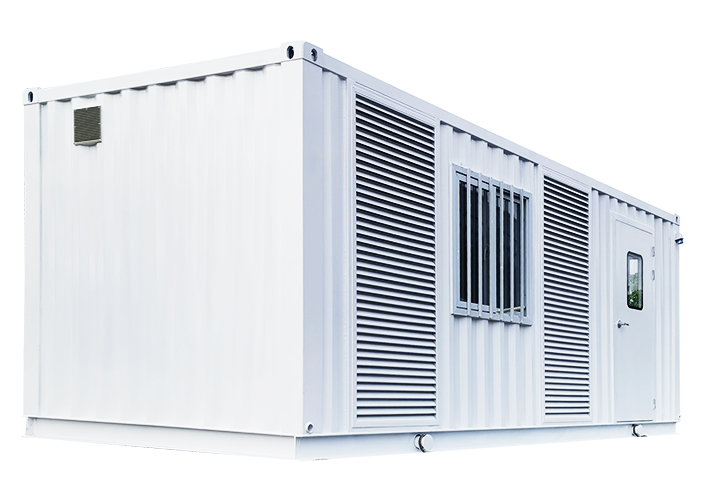
Conexwest delivers customizable shipping containers with optional pre-modification services to be converted into gyms nationwide.
Transforming a 20ft shipping container into a personal gym creates the perfect balance of accessibility and dedicated workout space.
The sturdy corten steel construction provides a durable, weatherproof shell that can withstand years of intense training sessions while keeping your equipment secure. Unlike temporary home gym setups that take over living spaces, a container gym gives you a permanent fitness solution without the massive investment of a traditional building addition.
The modular nature of shipping containers offers unprecedented flexibility. Your container gym can be placed virtually anywhere on your property, provided it has adequate foundation support. You can create your ideal training environment with a view of your garden, under shade trees, or even on the rooftop for properties with limited ground space.
Conexwest, a leader in shipping and storage solutions based in Northern California, offers new, used, and refurbished containers from 10ft to 45ft, with fast delivery within 3–7 days and container fabrication options like adding shelves and locks. We serve over 10,000 customers nationwide, including prestigious clients like the U.S. Navy and Google. As an ISO 9001 and AWS-certified company, we ensure top quality and competitive pricing.
A standard 20ft shipping container provides internal dimensions of approximately 19'4" length, 7'8" width, and 7'10" height. This gives you just under 150 square feet of usable floor space and approximately 1,170 cubic feet of volume.
While these dimensions may initially seem restrictive, they're comparable to those of many dedicated workout rooms in residential homes. The key difference is the need for more meticulous planning due to the fixed rectangular shape.
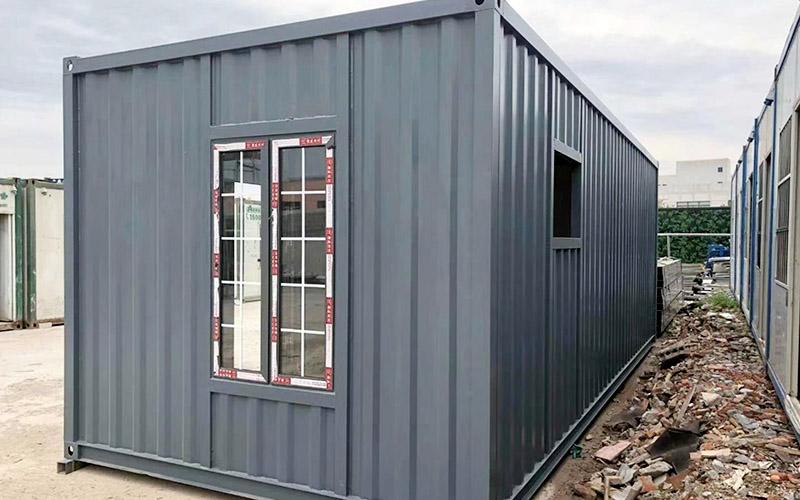
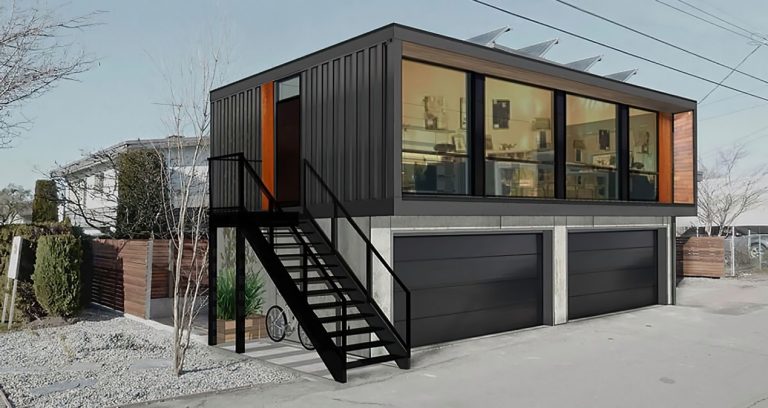
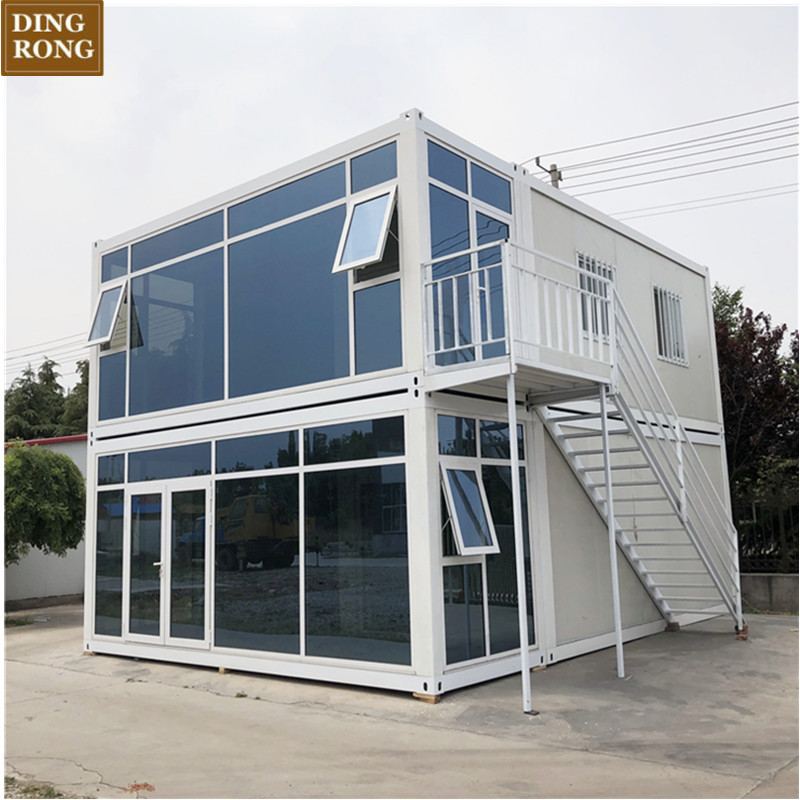
The steel construction allows for significant customization options that can expand your usable space. Adding windows, skylights, or roll-up doors dramatically changes the feeling of openness while improving ventilation.
For those with larger budgets, side-opening modifications can create an indoor/outdoor training area.
Maximizing functionality in your container gym requires strategic equipment placement that respects the flow of your workouts and movement patterns.
Place your primary lifting area near the center of the container, where ceiling height is typically highest, to ensure adequate clearance for overhead lifts and full-range movements.
Position rigs or racks approximately 3–4 feet from walls to enable safe movement around the equipment while maximizing barbell loading space on both sides.
Consider the natural progression of your typical workout when designing your layout. Most training sessions follow a pattern of warm-up, strength work, accessory exercises, and cardio finishers. Arranging equipment to support this flow reduces transition time between exercises.
Dividing your container gym into distinct functional zones maximizes training versatility within the limited footprint.
Most effective container gym layouts incorporate three to four zones: a strength-training area with a rack and weights, a floor-work/stretching zone with open-mat space, a cardio section with compact equipment, and possibly a recovery corner with foam rollers and mobility tools.
Adjustable cable stations are perhaps the single most versatile piece of equipment for container gyms, offering hundreds of exercise variations in a compact footprint. Look for wall-mounted pulley systems that provide both high and low positions to accommodate everything from lat pulldowns to face pulls to tricep extensions.
Modular rigs have revolutionized compact gym design by integrating multiple training stations into unified structures. A well-designed rig can incorporate a power rack, pull-up station, dip bars, landmine attachment, and suspension trainer anchors within a single 4×6-foot footprint.
Wall-mounted folding racks have transformed small-space strength training, offering full-power rack functionality with a minimal permanent footprint.
These ingenious systems bolt securely to your container's reinforced walls, providing a stable platform for squats, bench press, and overhead work, then fold flat against the wall when not in use.
This reclaims approximately 15–20 square feet of floor space that would otherwise be permanently dedicated to a traditional power rack.
Storage solutions that leverage vertical space are essential for maintaining an organized, functional container gym. Wall-mounted weight plate holders, barbell hooks, kettlebell trees, and band hangers keep equipment accessible while keeping it off the floor.
Barbell training forms the backbone of effective strength development but requires thoughtful implementation in container gyms.
A quality Olympic barbell with 2–3 pairs of bumper plates offers tremendous training versatility while minimizing space requirements.
Kettlebells provide exceptional training density, offering strength, power, cardio, and mobility benefits from a single implement that requires minimal storage space. A set of 3–5 kettlebells covering a range of weights creates nearly unlimited exercise possibilities when floor space is too limited for larger equipment.
The foundation of your container gym project starts with purchasing the container itself. New 20ft containers start from $2,349, while used containers in good condition can cost as low as $1,325. Container quality significantly impacts long-term durability and modification potential, making this initial investment particularly important.
Transforming a shipping container into a functional gym requires several essential modifications. This process involves installing doors and windows, insulating the interior, and, if needed, reinforcing the structure. Depending on the extent of the modifications, costs typically run around a few thousand dollars.
Essential modifications include:
Custom door and window installations
Structural reinforcement where needed
Interior preparation for equipment mounting
Basic insulation and ventilation systems are essential to maintain a comfortable workout environment, which can add another $2,000 to $5,000 to your budget. Effective climate control modifications make the space comfortable to use year-round while protecting your gym equipment from heat, moisture, and long-term wear.
The type and amount of equipment you want to include will significantly impact the total cost. Your equipment investment should align with your fitness goals and available space.
Basic Setup ($5,000–$10,000): A foundational setup with a few free weights, a treadmill, and a stationary bike provides comprehensive training options without overwhelming your space or budget.
Extensive Setup ($20,000+): More comprehensive equipment collections, including weight machines, a full range of cardio equipment, and specialized training tools, can easily exceed $20,000. Premium container gym builds rival commercial facilities in training capability.
Transporting the shipping container to your location and setting it up incurs additional costs that vary based on distance and site requirements.
Delivery fees: Delivery costs typically range from $500–$1,500, depending on the distance from the supplier and the accessibility of your property for transport and placement.
Site preparation and foundation: Proper setup usually costs $1,000–$3,000 and includes ground leveling, foundation work such as crushed stone, concrete footers, or a full slab, and measures to ensure long-term structural stability.
_These numbers are estimates, and the actual price can vary. Thus, it’s best to reach out to us for an accurate quote._
At Conexwest, we specialize in supplying containers for gym conversions with expert guidance throughout the entire process. Our inventory includes new, used, and refurbished 20ft containers, all inspected for structural integrity and suitability for modifications.
Here’s what we provide:
Quality Container Selection: We inspect every container for structural soundness, minimal corrosion, and proper door function. Our containers provide the foundation for durable, long-lasting gym conversions.
Fast Nationwide Delivery: We deliver throughout the United States within 3–7 business days. Our logistics network handles placement coordination with experienced operators who position containers precisely.
Container Fabrication Services: We offer pre-modification services, including cutting window and door openings, installing ventilation systems, preparing electrical conduit, and applying weather-resistant coatings in our controlled facility.
Competitive Pricing: Our transparent quotes include delivery costs with no hidden fees. We provide guidance on which modifications offer the best return on investment for gym applications.
Expert Support: Our team provides consultation on container selection, layout planning, and local code requirements. We help identify cost-effective approaches for your specific fitness needs.
The timeline for a complete container gym conversion typically ranges from 4 to 12 weeks, depending on the complexity of the modifications and contractor availability. Basic conversions with minimal structural changes, simple insulation, and standard electrical work might be completed in as little as a month.
Permit requirements vary dramatically by location, with some jurisdictions treating shipping containers as temporary structures requiring minimal permitting, while others classify them as permanent buildings subject to full building code compliance.
Mini-split heat pump systems represent the gold standard for container gym climate control, providing efficient heating and cooling from a single, compact unit. These ductless units require minimal wall penetration, operate quietly, and provide zone-specific temperature control.
The inherent portability of shipping containers represents a significant advantage over traditional gym buildings, allowing your fitness investment to move with you.
When designing your container gym with potential future moves in mind, consider using bolted rather than welded connections for major components, creating modular electrical systems with quick-disconnect options, and documenting your build with detailed photos.
Yes, we specialize in supplying and modifying shipping containers for gym applications nationwide. We provide consultation on container selection based on your training style, equipment plans, and site conditions.
Our team helps determine which container grade best fits your budget, which modifications make sense to complete at our facility before delivery versus on-site, and how to optimize the layout for your specific fitness goals.
Bookmark
Daniel Féau processes personal data in order to optimise communication with our sales leads, our future clients and our established clients.


This site is protected by reCAPTCHA and the Google Privacy Policy and Terms of Service apply.