



EUR
en
A centrifugal pump is a mechanical device designed to move a fluid by means of the transfer of rotational energy from one or more driven rotors, called impellers. Fluid enters the rapidly rotating impeller along its axis and is cast out by centrifugal force along its circumference through the impeller’s vane tips. The action of the impeller increases the fluid’s velocity and pressure and also directs it towards the pump outlet. The pump casing is specially designed to constrict the fluid from the pump inlet, direct it into the impeller and then slow and control the fluid before discharge.
High-efficiency
Centrifugal pumps are designed with impellers that create a centrifugal force, which imparts energy to the fluid. This hydraulic design allows for efficient fluid transfer with minimal energy losses.
Due to their high efficiency, centrifugal pumps require less power consumption compared to other types of pumps. This results in significant energy savings, reducing operational costs and environmental impact.
Wide range of applications
Centrifugal pumps find applications in numerous industries, including water supply and treatment, irrigation, chemical processing, hvac systems, power generation, and more. Their versatility makes them suitable for various fluid transfer tasks.
Simple and compact design
It feature a simple design consisting of an impeller, a casing, and inlet/outlet connections. This simplicity makes them easier to manufacture, install, and maintain.
The compact size of centrifugal pumps allows for easy installation in confined spaces. They require less floor area, making them suitable for applications where space is limited, such as onboard ships or in compact industrial facilities.
Ability to handle different pressures
Centrifugal pumps can handle both low and high-pressure operations. By adjusting impeller size, rotational speed, and design features, centrifugal pumps can be optimized to meet specific pressure requirements, offering flexibility in different applications.
Low maintenance
Centrifugal pumps are known for their robust construction and reliability. They are designed to handle demanding operating conditions, including continuous operation and handling a wide range of fluids.
End-suction centrifugal pumps: Also known as single-suction centrifugal pumps, are designed so that liquid enters the pump from only one direction. These pumps are usually used in water supply and hot water systems.
Double suction centrifugal pumps: In contrast to end suction centrifugal pumps, double suction centrifugal pumps are designed so that liquid is introduced from two directions. This type of pump is widely used in petroleum, chemical and electric power fields.
Multi-stage centrifugal pumps: These pumps have multiple impeller sets, each with its own level. Each stage increases the pressure of the pump, making the multistage centrifugal pump capable of providing higher pressure. This type of pump is mainly used in high pressure washing system, boiler feed water system.
Self-priming centrifugal pumps:This type of pump is self priming and does not require filling of the pump body before starting. It is widely used in irrigation, utilities, sewage treatment and other fields.
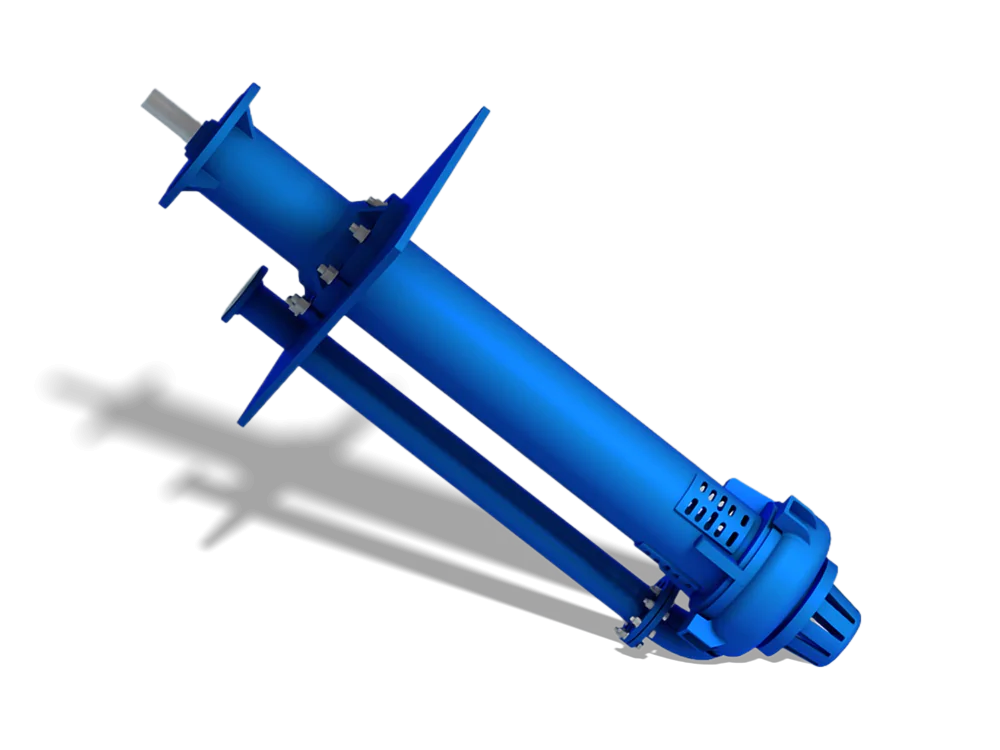
Vertical centrifugal pumps: The motor of this pump is located on top of the pump body, the impeller is located below, and is usually completely submerged by the pumping medium. They are widely used in groundwater lifting, chemical processes and so on.
Submersible centrifugal pumps: These pumps are designed to operate fully submerged in the pumping medium. They are commonly used for deep well water lifting, groundwater harvesting, drainage processes, etc.
Water transfer:Centrifugal pumps are used to transfer water in a variety of applications, such as irrigation systems, water treatment plants, and fire-fighting systems.
Industrial processes:Centrifugal pumps are used in many industrial processes to transfer chemicals, oil, and other liquids
HVAC systems:Centrifugal pumps are used in heating, ventilation, and air conditioning (HVAC) systems to circulate water, coolants, and other fluids.
Power generation:Centrifugal pumps are used in power generation to transfer water for cooling and other purposes
Marine applications:Centrifugal pumps are used in marine applications to transfer fuels, oils, and other liquids on ships and offshore platforms.
Mining:Centrifugal pumps are used in the mining industry to transfer slurry, a mixture of water and solids, to and from the processing plant.
Food and beverage processing:Centrifugal pumps are used in food and beverage processing to transfer liquids, such as juices, syrups, and sauces, from one stage of the production process to another.
Impeller
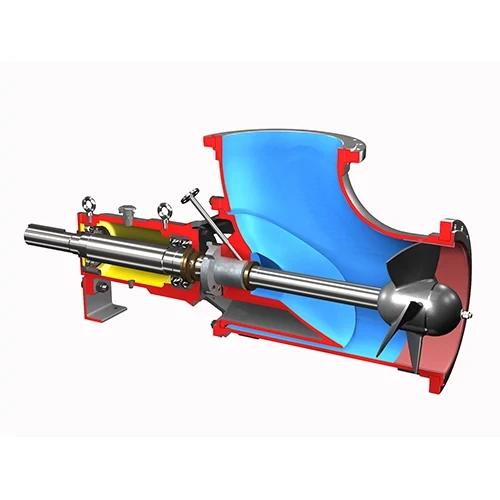
The impeller is the heart of a centrifugal pump. It is located within the pump casing and connected to the shaft. Its primary function is to increase the velocity of the liquid, creating centrifugal force. Impellers come in various shapes and sizes, and their design influences the efficiency and performance of the pump. This diversity of impellers renders them valuable in industries as varied as petrochemicals and wastewater management.
Casing
The casing surrounds the impeller and the pumped liquid. It has a specific shape that guides the flow of the liquid as it exits the impeller. The casing’s geometry is crucial for pump efficiency and can be of the volute or diffuser type, depending on applications in sectors like nuclear or desalination.
Shaft
The shaft connects the motor to the pump and transmits energy from the motor to the impeller. It must be robust and well-aligned to ensure smooth pump operation. Seals and bearings are used to support and seal the shaft in critical applications such as cryogenics.
Shaft seal
The shaft seal is a vital component for preventing liquid leaks from inside the pump to the exterior. It is located at the interface between the shaft and the casing.
Bearing
The bearing is an essential component in a centrifugal pump that plays a critical role in supporting and ensuring the smooth operation of the shaft, especially in applications in the oil & gas industry. Although often overlooked, its importance is fundamental in ensuring pump efficiency and durability.
Motor
The motor provides the necessary power to operate the centrifugal pump. It can be electric or of another type, depending on the application and environmental conditions.
Base or support
The base or support of the pump is the structure that holds the pump and motor in place. It must be sturdy enough to support the weight of the pump and withstand vibrations and forces generated during operation, especially in oil & gas-related applications.
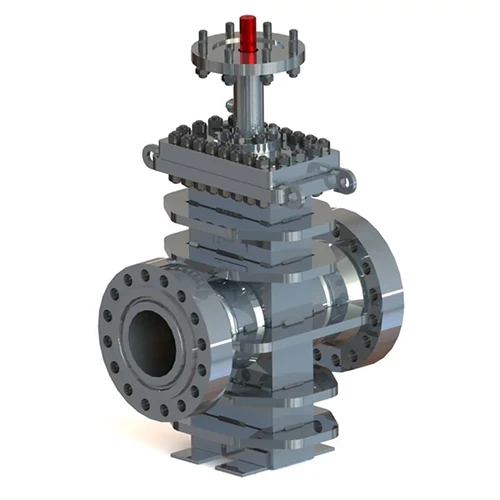
Inlet and outlet valves
Inlet and outlet valves control the flow of liquid into and out of the pump. These valves are essential for regulating pump operation and preventing overloads or pressure loss, which is vital in water treatment applications.
Instrumentation and controls
Depending on the application, centrifugal pumps may be equipped with additional instrumentation and controls, such as pressure sensors, flow meters, and automatic control systems.
Routine maintenance
Bearing and lubricant condition
Monitor and log bearing temperatures, lubricant level, and vibration. Lubricant should be clear with no signs of bubbling. If bubbling is occurring, this is a good indication to add more lubricant to decrease the temperature of the bearings. If there is an increase in vibration in the bearings, this may be a good indicator of impending bearing failure.
Shaft seal condition
Check the mechanical seals. There should be no signs of visible leakage.
During downtime, inspect the pump’s packing to make sure there is adequate lubrication. If the packing looks compressed and dry, replace the packing and add lubricant per the operation manual.
Overall pump vibration
Imminent pump failure can be detected by monitoring overall pump vibration. Excessive vibration can result from a change in pump alignment, bearing failures, cavitation, and obstructions in the suction and discharge lines.
Pump discharge pressure
The difference in pressure read by the suction and discharge gauges will provide the total developed head pressure of the pump. Confirm this reading is within the pump’s designed performance. You can find this on the manufactured website or your operation manuals.
Quarterly maintenance
1.Verify the integrity of the pump’s foundation and check the hold-down bolts for tightness.
2.For oil-lubricated pumps, as a rule of thumb, you should change the oil after the first 200 hours of operation for a new pump. Then again after every three months or 2,000 operating hours, whichever comes first. Your operation manual will have specific instructions for oil change intervals and oil grade.
3.For grease-lubricated pumps, as a rule of thumb bearings should be greased every three months or 2,000 operating hours, whichever comes first. Your operation manual should have specific instructions for grease intervals and grease grade to be used.
4.Grease the motor bearings according to the manufacturer’s instructions.
5.Check the shaft alignment.
6.Bearing vibration spectrum on all pump and motor bearings.
Annual maintenance
Keep a log of your pump’s performance at least once per year. Performance benchmarks should be established early on in the life of the pump. At a minimum, the benchmarking data should include head pressure, flow rate, motor amp draw, and vibration at each bearing.
Centrifugal pump set up is comprised of one or more impellers attached to a rotary pump shaft. This arrangement provides the energy required to conduct fluid through the pump system and the associated piping.
The impellers turning in sync with the pump shaft converts dynamic mechanical energy from the pump motor into the energy of moving fluids. While most of the energy derived from the motor will be converted to kinetic energy in the pumped fluids, a portion will be channeled as potential energy in fluid pressure calculated against gravity.
Centrifugal pump process
The operation cycle begins with the pump directing fluid into its suction ports and directing it onwards to the inlet of its impellers. Rotating impellers then move the pumped liquids along their spinning vanes whilst simultaneously increasing the fluid velocity.
The “charged” fluid then leaves the impeller vanes and is conducted to a diffuser casing or pump volute where high fluid velocity generated from the impeller vanes are converted to high fluid pressure.
Finally, the pressurized fluid is conducted to a discharge port or channeled to the next stage of a multi-stage pump system.
As a division of Wuhan GIENS Industry Co., Ltd, GNS PUPM is a leading manufacturer of vacuum pumps and centrifugal pumps, with its own research and development, design, and sales teams. With a commitment to innovation and quality, we have established ourselves as a trusted provider in the industry. Our vacuum pumps and centrifugal pumps are designed and manufactured using advanced technology and precision engineering. We continuously strive to enhance our products through research and development, ensuring that they meet the highest standards of performance and reliability.
Our products find applications in a wide range of industries. Our vacuum pumps are extensively used in processes such as vacuum distillation, vacuum drying, and vacuum packaging. They play a crucial role in industries like pharmaceuticals, chemical engineering, food processing, and electronics manufacturing. Our centrifugal pumps, on the other hand, are employed in various applications including water supply, wastewater treatment, and industrial processes.
Q: What is the primary function of a centrifugal pump?
A: Centrifugal pumps are hydraulically operated machines characterised by their ability to transmit energy to fluids (in particular to liquids) through the work of a field of centrifugal forces. Their main purpose is to transfer fluids through an increase in pressure.
Q: Why are centrifugal pumps useful?
A: Centrifugal pumps offer high efficiency, a wide range of applications, a simple and compact design, and low maintenance requirements. They are energy-efficient, versatile, and reliable tools for fluid transfer in various industries.
Q: What are the three main types of centrifugal pumps?
A: Centrifugal pumps can be categorised in different groups: Radial flow pumps, mixed flow pumps and axial flow pumps. Radial flow pumps and mixed flow pumps are the most common types used.
Q: What is the difference between centrifugal pump and submersible pump?
A: Centrifugal pumps are typically installed above ground and are suitable for applications where the pump can be situated at a higher elevation than the liquid source. They are commonly used for water supply and irrigation. Submersible pumps are installed within the fluid they are pumping.
Q: What is a major advantage of centrifugal pump?
A: The biggest advantage of centrifugal pumps is their aforementioned simplicity. They don't require any valves, or many moving parts. This makes them easy to produce with many different materials. It also allows them to move at high speeds with minimal maintenance.
Q: What are the 3 major parts of centrifugal pump?
A: It consists of three main components: an impeller, a casing, and a shaft. The impeller is a rotating component that contains blades or vanes that move the fluid. The casing is a stationary component that surrounds the impeller and guides the fluid to the discharge point.
Q: What is the difference between a centrifugal pump and a normal pump?
A: Positive displacement pump: the working principle involves an operation that moves fluid by trapping a fixed volume, usually in a cavity, and then forcing that trapped fluid into the discharge pipe. Centrifugal pump: this involves the transfer of kinetic energy from the motor to the liquid by a spinning impeller.
Q: When to use a centrifugal pump?
A: Centrifugal pumps are commonly used for pumping water, solvents, organics, oils, acids, bases and any 'thin' liquids in both industrial, agricultural and domestic applications. In fact, there is a design of centrifugal pump suitable for virtually any application involving low viscosity fluids.
Q: How deep can a centrifugal pump work?
A: One potential downside of centrifugal pumps is that their suction is not powerful enough for use in deep wells. Centrifugal pumps are only a viable option if your well is shallower than 25 feet.
Q: What is the principle of centrifugal pump?
A: A centrifugal pump is a mechanical device that moves fluid by transferring rotational energy from one or more driven rotors, called impellers. The fluid enters the rapidly rotating impeller along its axis and is discharged by centrifugal force along its circumference through the tips of the impeller's vanes.
Q: What type of motor is a centrifugal pump?
A: DC shunt motor: It is an almost constant speed motor. Hence it is used for driving constant speed line shafts, lathes, centrifugal pumps, small printing presses, paper making machines, etc.
Q: Which is better a centrifugal or peripheral pump?
A: If you need to pump water at elevations above 14 meters, a peripheral pump is more suitable, as these pumps are designed to work efficiently in these conditions, despite their lower flow rate. Centrifugal pumps, although powerful, may not be as efficient in these high head situations.
Q: Does a centrifugal pump need a motor?
A: A centrifugal pump operates through a rotating impeller within a casing that is usually driven by an electric motor or petrol / diesel engine. The centrifugal pump converts rotational kinetic energy from the driver to the hydrodynamic energy of the fluid flow.
Q: Can you reverse a centrifugal pump?
A: Put simply, the flow doesn't reverse, making reverse rotation hard to detect. The risk of reverse rotation is higher when putting in a new pump system, or replacing parts. To be safe, it's best to check which way the impeller rotates before you start pumping.
Q: Why centrifugal pump is used at home?
A: Centrifugal pumps also have numerous building applications. They are used to provide booster service into homes. They are also used in fire protection sprinkler systems or to circulate hot water. They can also be used for drainage and air conditioning systems.
Q: How long can a centrifugal pump run continuously?
A: Can a centrifugal pump run continuously? A centrifugal pump can easily run continuously if correctly selected to operate for 24 hours per day at a continuous duty cycle. If a centrifugal pump is not designed to run continuously, it will overheat and fail prematurely.
Q: Do centrifugal pumps need back pressure?
A: Centrifugal pumps need a certain backpressure to operate more efficiently and reach their full capacity. However, the physics behind this are not very straightforward.
Q: Why do centrifugal pumps fail?
A: Overheating—Check the lubrication, cooling system problems, or sources of excessive friction. Vibration—Can be the result of shaft misalignment, cavitation, imbalanced impellers, or worn bearings. Cavitation—Low pressure can cause vapor bubbles to form and implode.
Q: How to operate a centrifugal pump?
A: Operation: Open the suction valve of a centrifugal pump which will cause the liquid to flow into the impeller and fill the volume. Open the vent valve which is on the discharge line before the discharge valve of the centrifugal pump. This will cause air to move out of the casing and get filled with the liquid.
Q: How can you avoid problems in centrifugal pump?
A: Schedule routine inspections to check for wear, pump shaft misalignment, and leaks. Early detection can prevent problems from worsening. Develop a maintenance schedule that includes tasks such as lubrication, seal replacement, and impeller inspections.
Bookmark
Daniel Féau processes personal data in order to optimise communication with our sales leads, our future clients and our established clients.



This site is protected by reCAPTCHA and the Google Privacy Policy and Terms of Service apply.