






EUR
en
Industrial pumps play a critical role in a wide range of industries, from wastewater treatment to chemical processing, food production, and oil and gas applications. Two primary types of pumps used in industrial settings are centrifugal pumps and positive displacement pumps. Understanding the differences between these two types can help engineers, plant managers, and maintenance personnel choose the best pump for their specific applications.
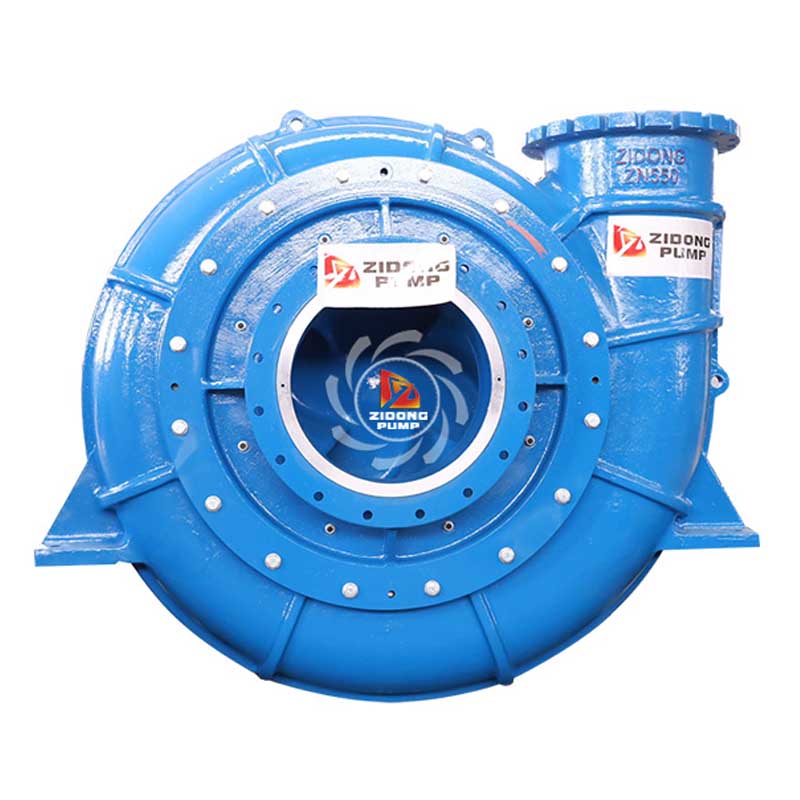
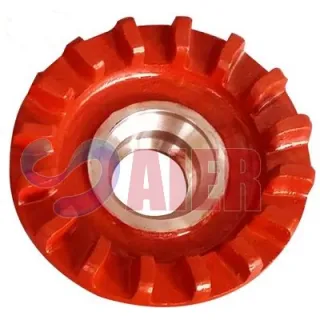
A centrifugal pump is a hydraulic machine that converts mechanical energy into hydraulic energy using rotational motion. It moves fluid through the system by imparting kinetic energy to the liquid, primarily through an impeller. As the impeller rotates, it increases the fluid’s velocity and pressure, forcing it through the pump’s discharge.
Centrifugal pumps are widely used in industries such as:
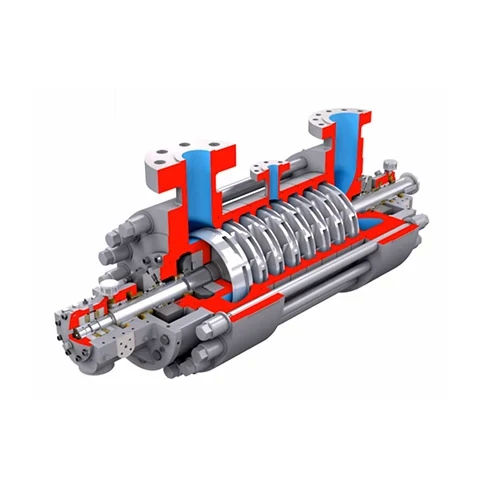
A positive displacement (PD) pump moves a fixed volume of liquid through repeated mechanical action. Unlike centrifugal pumps, which rely on kinetic energy, PD pumps trap a specific amount of fluid and force it through the discharge system.
PD pumps are commonly used in industries such as:
To provide a clearer understanding of the differences between centrifugal and positive displacement pumps, here’s a direct comparison of their features:
| Feature | Centrifugal Pump | Positive Displacement Pump |
|---|---|---|
| Operating Principle | Uses kinetic energy to move fluid | Moves a fixed volume per cycle |
| Best for Fluid Type | Low-viscosity fluids | High-viscosity and shear-sensitive fluids |
| Flow Rate | Variable based on pressure | Constant regardless of pressure |
| Efficiency | Best at high flow rates | Best at low flow rates and high pressures |
| Self-Priming | Typically requires priming | Usually self-priming |
| Shear Sensitivity | Can damage delicate fluids | Handles delicate fluids well |
| Energy Consumption | Lower at high flow rates | Can be higher due to mechanical operation |
| Common Applications | Water, HVAC, oil refineries | Food, pharmaceuticals, hydraulics |
| Initial Cost | Generally lower | Higher but offers specific advantages |
A large municipal water treatment plant relies on centrifugal pumps to distribute millions of gallons of water daily. These pumps efficiently handle low-viscosity liquids at high flow rates, making them the ideal choice for such applications.
In contrast, a positive displacement pump is used in a peanut butter manufacturing facility. Since peanut butter is highly viscous, a centrifugal pump would be ineffective, while a PD pump ensures consistent volume output without shearing the product.
When selecting between a centrifugal and a positive displacement pump, consider the following:
Both centrifugal and positive displacement pumps serve vital roles in industrial and commercial applications. Centrifugal pumps are the best choice for high-flow, low-viscosity applications, while positive displacement pumps excel in handling viscous, shear-sensitive, and high-pressure fluids. By understanding their key differences, you can choose the right pump for your system, ensuring maximum efficiency and reliability.
Bookmark
Daniel Féau processes personal data in order to optimise communication with our sales leads, our future clients and our established clients.


This site is protected by reCAPTCHA and the Google Privacy Policy and Terms of Service apply.