






EUR
en
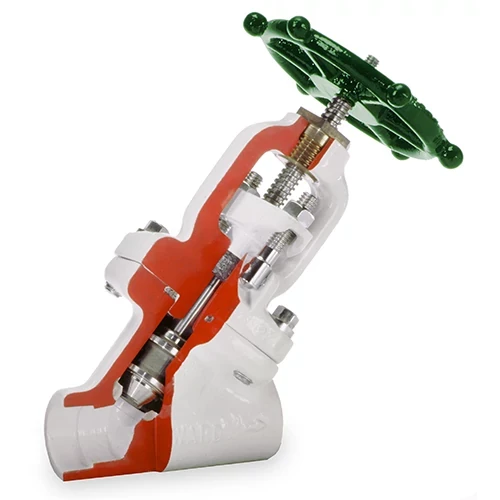
Our technical publications relative to reciprocating pumps state that pressure relief valves must be installed in the discharge systems from these units. This supplement is issued to emphasize the importance of relieving the discharge system of all pressure which exceeds the rated working pressure applied by the manufacturer to the specific pistons and liners (or plungers and packing) in any particular unit. For the protection of persons and property the discharge system from each Reciprocating Pump must be equipped with a device which relieves the system of all pressures which exceed the pressure rating applied by the manufacturer to each particular piston or plunger diameter. Allowances will be made for pressure surges which are inherent with the reciprocating action of piston and plunger pumps. The percentage of pressure allowance appears later in this publication and in the “Standards of the Hydraulic Institute” (13 th edition). The relieving device must provide for instantaneous pressure relief, it may be a valve designed for automatic or manual resetting; however, if preferred, rupture discs or burst discs may be installed. FAILURE to comply with the procedures outlined in the Warning may result in damage to the pump and related equipment and more importantly may cause serious bodily injury or death! THE PRESSURE RELIEF VALVE: 1. This valve must be a full opening type. 2. It must have a working pressure rating, equal to or greater than, the maximum working pressure of the pump. 3. The through capacity of the valve, when fully opened, must be sufficient to relieve the full capacity of the pump without excessive overpressure. RUPTURE DISC OR BURST DISC: 1. These discs must have a diameter which is not less than the pipe size of the pressure relief flange. 2. These discs must have a rupture or burst pressure rating consistent with the specifications tabulated later in this publication. LOCATION OF THE RELIEF VALVE: 1. The relief valve must be placed in the discharge line as close as possible to the pump fluid end or it may be mounted on the pump discharge manifold. 2. The relief valve must be on the pump side of any discharge strainer. 3. The relief valve must be between the pump fluid end and any valve in the discharge system. 4. There must be no restricting device(s) between the relief valve and the pump fluid end. THE RELIEF VALVE DISCHARGE LINE: 1. The relief valve discharge line should not terminate in the pump suction line. 2. The line should terminate in the supply tank, if possible. 3. The line must be securely anchored. 4. The line must be the same pipe size as, or may be larger than, the discharge connection on the relief valve. 5. If the line is of great length, this must be taken into consideration in sizing the relief valve. 6. There must be no restrictions or valves in the relief valve discharge line. NOTE: Follow the foregoing instructions if rupture discs or burst discs are installed. SUGGESTED SET PRESSURES FOR THE PUMP RELIEF VALVES: PUMP TYPE: OPERATING PUMP PRESSURE: Double Acting – Duplex Piston Pressure Rating – Plus 25% Double Acting – Triplex Piston Pressure Rating – Plus 10% Double Acting – Quintuplex Piston Pressure Rating – Plus 10% Single Acting – Triplex Piston Pressure Rating – Plus 10% Single Acting – Simplex Plunger Pressure Rating – Plus 25% Single Acting – Duplex Plunger Pressure Rating – Plus 20% Single Acting – Triplex Plunger Pressure Rating – Plus 10% Single Acting – Quintuplex Plunger Pressure Rating – Plus 10% Single Acting – Septuplex Plunger Pressure Rating – Plus 10% Note: The above set pressures are to be observed when installing rupture discs or burst discs.
Careful planning of the plant layout will save considerable time and expense, both initially when the installation is made and later during the operation of the plant. In selecting the location for the pump, consideration should be given to the fact that a positive suction head at the pump inlet contributes toward the pump efficiency. However, the layouts of the piping, the arrangement of the fittings, and restrictions in the suction and discharge lines have even more effect. For this reason, all fittings and valves should be full opening; all bends should be of long radius or should be eliminated where possible. Long radius 45 ° ells should be used, particularly if installed near the fluid cylinder. The following points outline the basic requirements for an installation that will contribute greatly toward good pump operation.
1. The suction line must not be smaller than the suction intake of the fluid cylinder and may be larger. The length of the suction line should be held to a minimum and should run straight from the supply tank to the pump. 2. When bends are required, they should be made with long radius 45 ° ells. Do not use a bend directly adjacent to the fluid cylinder. Avoid using any 90 ° bends if at all possible. 3. Provide a full opening gate valve in the suction line adjacent to the supply tank to permit the line to be drained when necessary. Do not use any type of restricting valve. 4. Do not use meters or other restrictions in the suction line. Eliminate any rise or summit in the suction line where air or vapor can collect. 5. Pulsation dampening devices are strongly recommended. 6. When necessary to manifold a number of pumps to a common suction, the diameter of the manifold and suction pipe leading from the supply tank must be such that it has a cross-sectional area equal to, or greater, than the area of the combined individual suction pipes. 7. When a charging or booster pump is used in the suction line, it must have a capacity equal to twice that of the pump output. This is necessary to provide a charging pump with an output great enough to meet the peak volume requirements of the plunger pump during the suction stroke and not act as a restriction in the line. 8. All piping, both suction and discharge must be solidly and independently supported. The first support must be as close to the pump as practical. This is necessary to prevent placing the pump in a strain and to keep any vibration in the system from acting directly on the pump.
1. Use a pulsation dampener or a desurger in the discharge line. It should be placed in the line as near the fluid cylinder as possible and ahead of any bend in the line. 2. Do not reduce the size of the discharge line below that of the pump outlet until the line has passed through the desurger, and is away from the pump approximately 20 feet (6m). 3. Any bend in the discharge line should be made with a long radius 45 ° ell. Do not use a bend directly adjacent to the fluid cylinder, particularly a 90 ° bend. 4. A pressure relief valve should be installed in the discharge line. The relief valve should be set to operate at a pressure no greater than 25% above the maximum rated pressure for the plunger size being used. It should be installed in the line ahead of any valve and be piped so that any flow is returned to the supply tank rather than the suction line. This will prevent possible damage to the suction line and suction dampener. 5. A by-pass line should be installed to permit the pump to be started without load. This allows oil to circulate and reach all parts in the power end before they are loaded.
1. The pump must be mounted level and should be grouted in and be free of strain. This applies to a skid-mounted pump or a pump mounted directly on a concrete base. 2. The sheave of a belt driven pump must be correctly aligned with the prime mover sheave. Care must be used to prevent over-tightening as this will shorten belt life, place the pump in a strain, and cause undue additional loads on the crankshaft and bearings. Sheave sizes should not be smaller than the minimum approved diameter. 3. When connecting a direct-driven pump, the shafts must be correctly aligned. Couplings should not be expected to compensate for avoidable misalignment. With Thomas Flexible Couplings, angular misalignment should not exceed one-half degree. Offset misalignment of the centerlines of the two shafts should not exceed .015" (.381 mm). Actually, misalignment should be as small as practical. 4. Provision should be made to stop the pump automatically in the event of supply fluid failure. A pump should not be run dry, as this causes wear on the packing. 5. Adequate plunger chamber drains have been provided in the pump and should not be plugged. Drain lines should never be reduced in size from the connection provided. 6. The pump has been drained of oil after testing at the factory and MUST be filled with the proper oil (see page 13) before starting. The rust inhibiting oil coating inside the power end need not be removed before filling; however, it is recommended that the power end be checked to make sure dirt or contamination has not entered during shipment.
1. The fluid cylinder is shipped assembled to the pump complete with valves and cover plates. The stuffing boxes, plungers, and related items have also been assembled and tested with the pump (unless otherwise specified) and require no further assembly. Before the pump is started, these parts should be checked for tightness as well as for possible damage during shipment. 2. Thoroughly clean the suction line piping before starting the pump. Weld spatter, slag, mill scale, etc., will damage a pump in a short time.
The recommended style of packing has been installed and run at the plant. It does, however, require further "setting up" as the pump is started and brought up to pressure. Refer to pages 36 through 39 for correct procedure for packing used.
1. Automatic packing lubricators are beneficial on all installations and are required on pumps operating at high pressure (1200 psi [85kg/cm 2] and up) to obtain good packing life. 2. When an automatic lubricator is used in water and power oil service, use Rock Drill (Air Drill) oil of proper viscosity. For butane-propane service, use NATURAL castor oil. Set lubricator to feed 5 to 7 drops per minute.
Some National Oilwell Varco plunger pumps are equipped with suction pulsation dampeners. These dampeners do an excellent job when properly charged and should be kept filled during operation. At suction pressures over 10 psi (.7kg/cm2), the dampener should be deflated prior to bleeding off the suction pressure to prevent damage to the diaphragm. The plastic dampener body has an instruction decal attached, which lists the following installation and charging procedures. Tighten cap screws with 10 to 12ft-lbs. of torque. Use thread sealing compound on check valve and tighten until snug. Overtightening will damage body. With pump operating - Charge dampener until bottom of diaphragm is visible through sight glass. Proper charge is when bottom of diaphragm is between center and top of sight glass.
In pressures in excess of 20 psi (1.406 kg/cm 2 ) and up to 70 psi (10.545 kg/cm2), it is necessary to use the National Oilwell Varco high pressure suction dampener. The high-pressure dampener is charged in a similar manner to the low-pressure plastic dampener, using air or nitrogen to charge the diaphragm and maintain its position in relation to the sight glass. The following procedures should be used to service this dampener: (1) The dampener is fitted to an adapter that may be either welded into an existing line or be a part of a separate dampener housing. Place a gasket on each side of the diaphragm retaining plate and place on the adapter. (2) The dampener spacer is then placed on top of the retainer plate with the grooved side up and the flat side against the retainer gasket. (3) The diaphragm fits into the groove on the spacer with the curved portion of the diaphragm above the spacer. (4) Apply a continuous 1/8" diameter bead of silicone rubber on the outer edge of the diaphragm after it has been positioned into the spacer. This silicone rubber (GE Silicone Rubber or Dow-Corning Silastic) is readily available at most hardware stores. Assemble the body cover within ten minutes after applying the silicone rubber. (5) Fit the dampener cover over the diaphragm and assemble the capscrews. Tighten these capscrews evenly to approximate 80 ft-lbs. of torque. (6) Install the sight glasses, one in each side of the cover. Be sure to seat the sight glass packing carefully into the groove on the cover, as this must be an airtight connection. (7) The air check valve has a pipe thread and must be made up into the cover airtight. Use a good pipe thread sealant to promote sealing.
NATIONAL OILWELL VARCO Plunger Pumps are "splash" lubricated. The main bearings receive oil through ports in the frame. Crankshaft bearings are fed by splash and at low speed through roll pins from the crosshead reservoir. Crossheads and crosshead pin bushings are fed through holes in the crossheads and crosshead reservoir. Intermediate rods are lubricated from the splash they receive from the crosshead. At speeds under 200 rpm, special auxiliary oil systems are required except on the 300Q Initial filling should be into the crosshead reservoir on top of the crossheads.
Use "extreme pressure" gear oil. The chart below shows the recommended grades for various temperatures surrounding the pump. U.S. UNITS OF MEASURE Temperature AGMA Industrial EP Gear Oil +50°F to +155°F AGMA No. 6 EP or ASTM/ISO Grade No. 320 (viscosity 1335 to 1632 SSU 100°F) +20°F to +100°F AGMA No. 5 EP or ASTM/ISO Grade No. 220 (viscosity 918 to 1122 SSU 100°F) -20°F to + 60°F AGMA No. 2 EP or ASTM/ISO Grade No. 68 (viscosity 284 to 347 SSU 100°F) Crankcase Capacity - U.S. Gallons: 30T - 1-1/2 100T - 5-1/2 200T - 860T - 2 130T - 5-1/2 250T - 880T - 2 165T - 8 300Q - 12 METRIC UNITS OF MEASURE Temperature AGMA Industrial Gear Oil +10°C to +68°C AGMA No. 6 EP or ASTM/ISO Grade No. 320 (Viscosity 228-352 cSt at 37.8°C) -7°C to +38°C AGMA No. 5 EP or ASTM/ISO Grade No. 220 (Viscosity 198-242 cSt at 37.8°C) -29°C to +16°C AGMA No. 2 EP or ASTM/ISO Grade No. 68 (Viscosity 61-75 cSt at 37.8°C) Crankcase Capacity - Liters: 30T - 5.7 100T - 20.8 200T - 30.3 60T - 7.6 130T - 20.8 250T - 30.3 80T - 7.6 165T - 30.3 300Q - 45.4 Oil must pour freely at minimum operating temperature. Change oil every six months or as frequently as operating conditions require to maintain a clean, sludge-free oil of proper viscosity.
THE FOLLOWING POINTS SHOULD BE CHECKED FOR THE PREVENTION OF TROUBLE OR TO CORRECT TROUBLE THAT MAY ARISE.
1. Pump must be a set level for proper lubrication. If an auxiliary lubrication pump is used for slow speed operation, make sure it is connected and is operating properly. 2. Make sure pump is filled with clean oil of the proper viscosity (see above). 3. Do not over-speed the pump. 4. Do not use a smaller diameter sheave than is recommended for the pump. 5. Make sure all safety shutdown switches are operating properly. 6. Keep all suction and discharge line valves fully open. 7. If a bypass is used to regulate output, make sure it is set properly. 8. Make sure the pressure relief valve is set properly. 9. Do not exceed the pressure rating of the pump for the particular plunger size. 10. Make sure the suction line is tight as air entering the suction line will cause severe hammering and knocking of the pump. 11. Make sure plunger and intermediate rod connections are tight and locked. 12. Check the plunger packing for correct adjustment (see pages 36 to 39). 13. Check the suction and discharge dampeners for proper charge as this is very important for long dampener life and good pump operation. 14. Make sure the hex nuts holding the cylinder in place are tight.
The following points are intended as a guide to be used in setting up a maintenance program. Good preventive maintenance will pay big dividends in the form of reliable service with a minimum of trouble.
1. Check power end oil level daily by means of the dipstick in the rear cover. Do not attempt to check the oil with the pump running. Inspect the oil for dirt or contamination and change if necessary. An increase in oil level indicates fluid end leakage into power end. Change oil immediately and check intermediate rod wipers and surface smoothness of rod. Check for plunger packing leakage. 2. Lubricate plunger packing frequently. Packing life can be greatly increased by greasing every four (4) hours with a small amount of grease. Grease is not recommended at pressures above 1200 psi. Use an alternate packing lubricator to drip the proper oil of the plunger for lubrication. (See page 13 for further details). 3. Check lubricator for proper level and operation. 4. Check plunger packing for excessive leakage. Replace packing as required. 5. Check stuffing box adjusting nuts for tightness. 6. Drain plunger leakage sump tanks if required. 7. Flush plunger chamber drain lines with kerosene on power oil pumps and fresh water on salt pumps. This may be done weekly unless salt and paraffin accumulation is severe. 8. Make sure suction and discharge line valves are fully open. 9. Check for leakage between the fluid cylinder and frame or stuffing box to fluid cylinder packing if required. 10. Check all seals for leakage. 11. Check belts or clutch for slippage. If either condition exists, correct immediately.
1. Drain and refill crankcase every six (6) months or as often as required to maintain a clean, sludge-free oil of the proper viscosity. 2. Clean crankcase air breather with a non-explosive solvent. 3. Check all studs, nuts and capscrews for tightness. Inspect gaskets for leaks; tighten or replace as required. 4. Clean pump. Good housekeeping is a prerequisite to good maintenance.
If the pump is to be idle for longer than one (1) week, it should be prepared for storage as follows: 1. Drain and clean crankcase thoroughly. Leave drain open and install 90 ° elbow, pointing downward, to permit air circulation and prevent condensation build-up. 2. Coat all bearings, finished surfaces, and entire inside surface of crankcase with a rust inhibiting oil. 3. Remove plungers and packing, clean and coat with rust inhibiting oil. 4. Remove fluid cylinder valves allowing cylinder to be thoroughly cleaned and drained. 5. Coat entire cylinder, valves and parts, with a rust inhibiting oil. 6. Thoroughly inspect pump and rotate crankcase once each month. Re-coat with rust inhibiting oil where necessary.
Any pump that has been in storage, either after field use or as shipped from the plant, will need a thorough inspection to make sure it has not been damaged in any way and that all parts are properly in place. Remove all covers on both power end and fluid end; thoroughly clean and inspect all parts and finished surfaces. 2. Check all bearings to make sure they are clean and in good condition. 3. Make sure valves, plungers and packing are properly installed and in good condition. 4. Carefully tighten all bolts, nuts, studs and working connections. 5. Fill power end to the proper level with clean oil of the proper viscosity. Make sure oil is poured into the crosshead reservoir and is worked into all bearings. 6. Fill packing lubricator and pump lines full. Check by breaking connection at stuffing box, working lubricator plunger until oil appears.
SUCTION LINE RESTRICTED BY :(1, 2, 3, 4) 1. TRASH , SCALE BUILD UP , ETC . LOCATE AND REMOVE 2. PARTIALLY CLOSED VALVE IN SUCTION LINE LOCATE AND CORRECT 3. METERS , FILTERS , CHECK VALVES ,NON - FULL - OPENING , CUT - OFF VALVE OR OTHER RESTRICTIONS .RE - WORK SUCTION LINE TO ELIMINATE 4. SHARP 90 º BENDS OR 90 º BLIND TEES . RE - WORK SUCTION LINE TO ELIMINATE .AIR ENTERING SUCTION LINE THROUGH CUT - OFF VALVE TIGHTEN OR REPACK VALVE STEM PACKING AIR ENTERING SUCTION LINE THROUGH LOOSE CONNECTION OR FAULTY PIPE LOCATE AND CORRECT AIR OR VAPOR TRAPPED IN SUCTION LINE LOCATE RISE OR TRAP AND CORRECT BY STRAIGHTENING LINE , PROVIDING ENOUGH SLOPE TO PERMIT ESCAPE AND PREVENT BUILD -UP LOW FLUID LEVEL INCREASE SUPPLY AND INSTALL AUTOMATIC LOW LEVEL SHUT - DOWN SWITCH SUCTION DAMPENER NOT OPERATING INSPECT AND REPAIR AS REQUIRED WORN VALVES INSPECT AND REPAIR AS REQUIRED ENTRAINED GAS IN FLUID PROVIDE GAS BOOT OR SCRUBBER FOR FLUID POOR INLET AND OUTLET ARRANGEMENT AT SUPPLY TANK INLET TO BE AT TOP OF TANK AND BAFFLED TO BREAK - OUT GAS AND PREVENT CHANNELING .OUTLET TO BE 12" FROM BOTTOM OF TANK AND AS FAR FROM INLET AS POSSIBLE , NEVER CLOSER THAN 90 º .LOOSE PACKING ADJUSTING NUT TIGHTEN AND / OR REPLACE PACKING INADEQUATE SIZED SUCTION LINE REPLACE WITH INDIVIDUAL SUCTION LINE OF NEXT SIZE LARGER THAN INLET PUMP LEAKAGE PRESSURE RELIEF VALVE THAT HAS BEEN PIPED BACK INTO SUCTION LINE REPAIR VALVE AND RE - WORK PIPING TO RETURN TO SUPPLY TANK - NOT SUCTION LINE .BY - PASS PIPED BACK TO SUCTION REWORK TO RETURN BY - PASSED FLUID BACK TO SUPPLY TANK - NOT SUPPLY LINE
BROKEN PLUNGER INSPECT WHEN ROTATING PUMP BY HAND AND REPLACE AS REQUIRED
VALVE WEAR OR DAMAGE CHECK FLUID END FOR BAD VALVES WORN MAIN BEARINGS REPLACE AS REQUIRED LOOSE PLUNGER - INTERMEDIATE ROD CROSSHEAD CONNECTION INSPECT FOR DAMAGE - REPLACE AS R EQUIRED AND TIGHTEN WORN CROSSHEAD PIN , OR CONNECTING ROD LOCATE AND REPLACE AS REQUIRED
CORROSION TREAT FLUID AS REQUIRED ABRASIVES IN FLUID FILTER AS REQUIRED IMPROPER INSTALLATION INSPECT AND INSTALL PER INSTRUCTION SHEET IN PACKING BOX IMPROPER LUBRICATION ( EITHER INSUFFICIENT OR EXCESSIVE OR INCORRECT TYPE )CHECK INSTRUCTIONS IN MANUAL AND CORRECT AS REQUIRED .LUBRICATOR NOT OPERATING INSPECT AND CORRECT AS REQUIRED ADJUSTING NUT LOOSE INSPECT AND REPACK PER INSTRUCTIONS
SCALE OR BUILD UP ON PLUNGER TREAT FLUID AS REQUIRED WORN OR PITTED PLUNGERS AND/OR STUFFING BOX REPLACE AS REQUIRED ABRASIVES IN FLUID FILTER AS REQUIRED PUMP OPERATED WITHOUT FLUID CHECK SYSTEM FOR FAULTY LOW - LEVEL SHUT - DOWN CONTROLS OR CLOSED VALVES AND CORRECT AS REQUIRED .ABNORMALLY HIGH FLUID TEMPERATURES CHECK WITH MANUFACTURER FOR RECOMMENDATIONS ON TYPE OF PACKING WRONG TYPE OF PACKING FOR PARTICULAR FLUID BEING HANDLED CHECK WITH MANUFACTURER FOR RECOMMENDATIONS ON TYPE OF PACKING CAVITATION ( KNOCKING AND POUNDING IN FLUID CYLINDER AND PIPING )REFER TO CORRECTION OF "KNOCK IN POWER END " ABOVE
INSTALL NEW PLUNGER USING CARE TO AVOID ANY SHARP BLOW OR FORCE ON PLUNGER .PLUNGER CRACKED FROM THERMAL SHOCK .CHECK SYSTEM TO ELIMINATE ANY SHARP OR SUDDEN TEMPERATURE DIFFERENCES .TEMPERATURE EXTREMES ON THE PLUNGER CAN OCCUR FROM PACKING AS DISCUSSED UNDER “ SHORT PACKING LIFE ” PROBLEM PR FROM TEMPERATURE CHANGES IN THE FLUID ITSELF . BROKEN OR PITTED FROM IMPLOSIONS CAUSED BY IN EXCESSIVE GAS OR AIR ENTRAINED FLUID. PLUNGER PITTED FROM IMPLOSIONS CAUSED BNY EXCESSIVE GAS OR AIR ENTRAINED IN FLUID .CHANGE SUCTION SYSTEM TO ELIMINATE OR CHECK WITH MANUF . REGARDING USE OF SPECIAL PACKING ARRANGEMENT .PACKING FAILURE .CHECK AND CORRECT PER RECOMMENDATIONS UNDER “ SHORT PACKING LIFE ” PROBLEM .RAPID WEAR OF HARD-COATED PLUNGER PLUNGER NOT SUITABLE FOR PARTICULAR SERVICE . CHECK WITH MANUF . FOR RECOMMENDATION .PLUNGER NOT SUITABLE FOR PARTICULAR SERVICE . C HECK AND CORRECT AS REQUIRED .PUMP NOT LEVEL . CHECK AND CORRECT AS REQUIRED .WORN , CORRODED , PITTED , OR OTHERWISE DAMAGED SEALING SURFACE . CHECK AND CORRECT AS REQUIRED .W ORN OR DAMAGED SEALS . CHECK AND CORRECT AS REQUIRED .OIL SEAL LEAKS OIL LEVEL TOO HIGH . CHECK AND CORRECT AS REQUIRED .
The bearings and other working parts in the power end have been designed for continuous duty, and if properly lubricated, will provide years of trouble-free service. However, after the pump has been in service for a long period of time, the bearings and other working parts will gradually loosen, and if not corrected, will lead to more serious trouble. The time to overhaul the pump will vary, depending on the operating conditions, and is therefore a matter that must be left to the good judgment of the operator. Complete disassembly and assembly procedures are discussed in their respective sections.
Most of the tools required to overhaul the pump will be found in an ordinary set of mechanics hand tools. The special tools and equipment required and not furnished with the pump include a torque wrench, bearing puller, and a valve servicing kit. Also, a hot oil bath capable of reaching a temperature of 300 ° F (149 ° C) will be needed.
30T, 60T & 80T: The crankshaft main bearings are single row, shim adjusted, tapered roller bearings. They have been assembled and adjusted at the factory with proper clearance and will give long trouble-free service. The proper clearance is found by adjusting the amount of shims until the crankshaft has .003" to .005" endplay and will rotate freely. 2. 100T, 130T, 165T, 200T, 250T & 300Q: a. The crankshaft main bearings are non-adjustable, double row tapered roller bearings, factory set for the proper running clearance. b. The connecting rods, or bearing inserts, are solid aluminum alloy precision ground with the following tolerances -- page 21. c. The minimum allowable clearance between the crosshead and crosshead bore is .012" (.305 mm). The maximum allowable clearance, including wear, is .030" (.762 mm). This is for all pumps. d. Maximum allowable clearances between the crosshead pin and connecting rod bushings are listed on page 21. The bushings are pressed into the connecting rod and must be reamed to size. The pin and bushings must then be "blued" to check the fit. High spots in the bushings must be scraped.
CRANKSHAFT O.D MAXIMUM CLEARANCE MINIMUM CLEARANCE PUMP in mm in mm in mm 30T 2.500 2.499 63.500 63.475 .012 .305 .003 .076 60T 80T 3.250 3.249 82.550 82.525 .013 .330 .003 .076 100T 130T 4.125 4.124 104.775 104.750 .018 .457 .007 .178 165T 250T 200T 300Q 5.000 4.999 127.000 126.975 .020 .508 .0064 .163 CROSSHEAD PIN O.D. MAXIMUM CLEARANCE MINIMUM CLEARANCE PUMP in mm in mm in mm 30T 1.3765 1.3760 34.963 34.950 .007 .178 .001 .025 60T 80T 1.8765 1.8760 47.663 47.650 .007 .178 .0015 .038 100T 130T 2.5635 2.5300 65.113 65.100 .007 .178 .0015 .038 165T 200T 250T 300Q 3.0015 3.0010 76.238 76.225 .008 .203 .002 .051
It is not necessary to remove the fluid end when disassembling the power end. The plungers may be disconnected from the intermediate rods and left in the stuffing boxes.
Loosen the plunger lock screws (if used), disconnect the plunger from the intermediate rod, and remove the baffle plate. The oil wiper retainer is piloted into the frame and held in place by two capscrews or a metal clip. 3. Remove the intermediate rod to crosshead lock screw (if used), and using a back-up wrench on the crosshead, unscrew the rod. Remove the rod and oil wiper retainer as one assembly.
Remove connecting rod bolts and cap. NOTE: Match marks and deep halves together. 2. Connecting rod and crosshead must be moved all the way forward to clear crankshaft. 3. Remove crankshaft bearing retainers and seals, and shims. These shims should be tied together and marked for reassembly at their original location. Rotate No. 1 throw to front, support the crankshaft, and remove it from either side, tapping it out with a brass bar to prevent damage to the end. This will automatically remove one of the main bearing outer races. The other race may be removed by knocking it out with a brass bar. Tag the outer bearing races so they may be reassembled with the same bearing cone and roller assembly.
30T, 60T, and 80T 1. Remove connecting rod bearing cup and both inserts. NOTE: Match marks on rod and cap and keep halves of inserts together. 2. Connecting rod and crosshead can be removed through cradle chamber without disturbing the crankshaft. Interference with plungers and stuffing box nuts is possible depending on plunger size. Remove plungers if necessary. 3. Remove crankshaft bearing oil seal retainers and gasket. 4. Use puller screws in crankshaft bearing cage "back-out" holes, if necessary, and remove crankshaft assembly with main bearing cage from the left side of the pump. During removal have No.1 throw on crankshaft forward.
J-100 Prior to S/N 9568 and J-150 1. Remove all the connecting rod bearing caps and both inserts. Keep halves inserted together. 2. Connecting rod and crosshead must be moved all the way forward with intermediate rods removed, to clear crankshaft. 3. Remove crankshaft bearing oil seals retainers and gasket. 4. Use puller screws in crankshaft bearing cage "back-outs" holes, if necessary, and remove crankshaft assembly with main bearing cage from the left side of the pump. During removal have No.1 throw on crankshaft forward.
100T, 130T, 165T, 200T, 250T and 300Q 1. Remove connecting rod bearing cap and both inserts. Keep halves of inserts together. 2. Connecting rod and crosshead can be removed through cradle chamber without disturbing the crankshaft. Interference with plungers and stuffing boxes is possible depending on plunger size. Remove stuffing boxes if necessary. 3. Remove oil wiper troughs. (200T, 250T and 300Q) 4. Remove right hand bearing retainer and gasket. 5. Remove left hand bearing retainer and gasket and remove capscrews from bearing cage. 6. Crankshaft can be removed from left side of pump only. Puller holes are provided in the bearing cage if needed. Extreme care should be used in removing the crankshaft so as not to damage the center support bearings or the bearing journals on the crankshaft of the 300Q.
The crankshaft main bearings may be inspected while on the crankshaft and should not be removed unless necessary. A puller is required when replacement is necessary. NOTE: Keep the component parts of the bearings together if they are to be re-installed. They are match marked and must be correctly assembled as a unit.
30T, 60T and 80T 1. Disconnect piping. 2. Remove the eight (8) fluid cylinder hex nuts and slide cylinder forward over the main frame studs. 100T, 130T, 165T, 200T, 250T and 300Q 1. Fluid cylinders can be removed without disturbing the stuffing boxes or plungers. But it is recommended that the stuffing boxes and plungers be removed for easier access to the lower cylinder studs and nuts. 2. Disconnect piping. 3. Remove nuts holding stuffing box retainer in place. 4. Slide retainer clear of the cylinder studs. 5. Remove fluid cylinder retaining socket head capscrews.
30T, 60T and 80T 1. Rotate crankshaft until the intermediate rod is in the back position of its stroke. Loosen the plunger lock screw (if used), and disconnect the plunger from the intermediate rod. 2. Slide the plunger forward in the stuffing box. Unscrew the intermediate rod. Remove the clip holding the intermediate rod wiper retainer; remove the rod and retainer as one assembly. 3. The plunger can now be slid back out of the stuffing box and removed through the cradle chamber. 4. Remove stuffing box nut and packing. 5. For removal of the stuffing box, the fluid cylinder must be first removed.
100T, 130T, 165T, 200T, 250T and 300Q 1. Rotate the crankshaft until the intermediate rod is all the way forward (at the end of the discharge stroke). Remove the intermediate rod to crosshead
Bookmark
Daniel Féau processes personal data in order to optimise communication with our sales leads, our future clients and our established clients.


This site is protected by reCAPTCHA and the Google Privacy Policy and Terms of Service apply.