






EUR
en
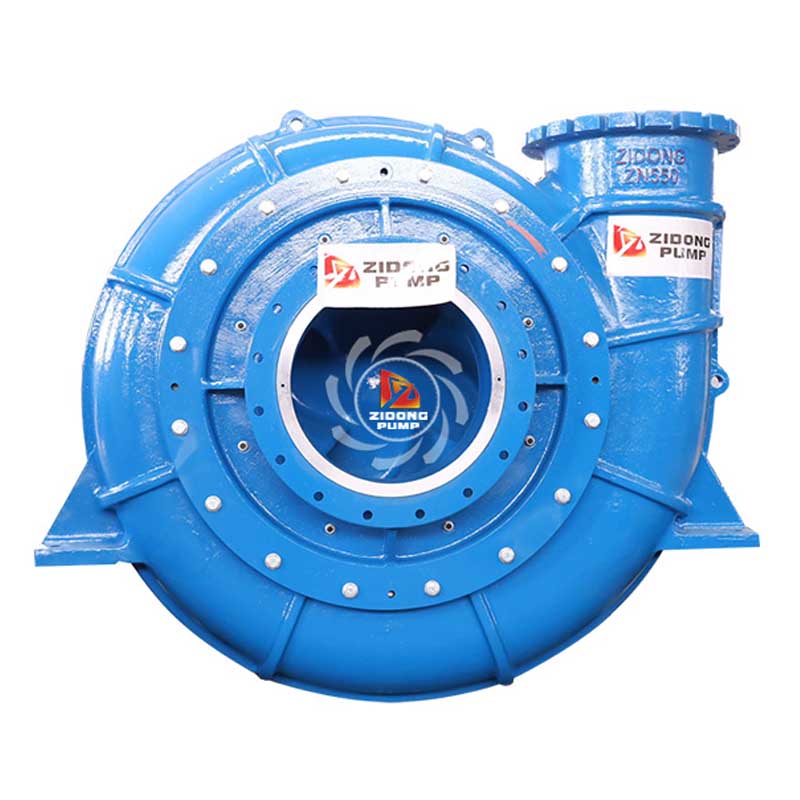
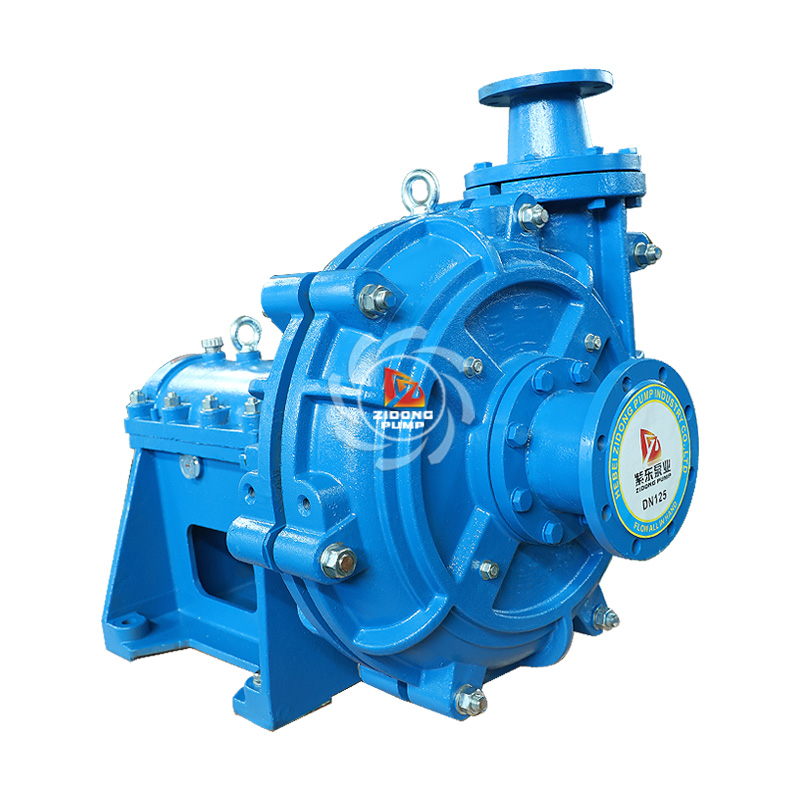
Sand slurry pump allows for deep extraction of slurry and enables the assembly of multiple units for long-distance transport. In various engineering applications, the design and operation of sand slurry pump systems require careful consideration of several critical factors. This article explores the importance of sand slurry pumps and provides insights into their technical aspects, helping customers better understand and utilize this technology.
The sand slurry pump dates back to the 1930s. At that time, Australian engineer Charles Warman invented a more efficient and reliable centrifugal sand slurry pump. He patented it and established a company that became a leader in the global market by the 1970s. Many pump manufacturers today replicate Warman’s design. Sand slurry pump manufacturers have improved these pumps, resulting in comprehensive solutions.
Modern sand slurry pumps feature excellent wear resistance and are easy to maintain. They often operate in remote and harsh environments, which requires reliability. According to market research, the global market size for sand slurry pumps exceeded $1.2 billion in 2019. This indicates sustained demand for sand slurry pumps across various industries.
When selecting and maintaining a sand slurry pump system, engineers must understand the basic principles of slurry handling. Improper handling can lead to prolonged downtime and leakage in sealing areas. This article outlines key factors that engineers need to consider, including pipeline friction loss, solid settlement, and the performance and lifespan of the sand slurry pump system.
In sand slurry pumps, “slurry” refers to liquid containing solid particles. This liquid can appear in various forms, from thick red mud to low-concentration particle slurries, even containing gravel chunks several centimeters in size. Centrifugal pumps widely transport slurry. Initially, transport distances were short, but now they can extend to tens or hundreds of kilometers. Currently, several projects in Zhejiang utilize sand slurry pumps to transport slurry over distances of 50-80 kilometers. Interested clients are welcome to visit these sites.
Slurry transport is prevalent in the mining industry. It serves as a crucial component in mineral extraction, processing, and coal washing. The solid components may include raw ore or processed tailings. Besides mining, slurry handling applications extend to power generation, wastewater treatment, sand and gravel transport, and even agricultural engineering.
Slurry transported by sand slurry pumps is generally divided into two categories:
This type of slurry appears as a flowing mud-water mixture. It contains small solid particles that do not settle easily. During transport, the solid concentration at the bottom of the pipeline is usually higher than at the top, creating a bullet-shaped distribution. Solutions for non-settling slurry typically model the fluid as a non-Newtonian (Bingham plastic) fluid. When released onto the ground, this liquid does not flow like water; instead, it collapses slightly. The lower the collapse degree, the higher the shear stress and shear rate, which makes pumping more challenging. Centrifugal pumps sometimes cannot handle this type of slurry, such as coal tailings transported by deep cone thickeners. In such cases, expensive positive displacement pumps or combined disposal methods may be necessary.
This type of slurry contains larger solids, with a D50 particle size typically ranging from 0.02 mm to 150 mm. Handling this settling slurry often requires extensive practical experience. Theoretical methods can be inconsistent, partly due to the inability to model the effects of turbulence accurately. Empirical methods require data and depend on various factors: D50 particle size, medium density, solid concentration, and the ratio of particle size distribution to pump impeller diameter.
Manufacturers offer various heavy-duty sand slurry pumps, each with distinct characteristics suited for different operating conditions. For instance, one model in the heavy-duty sand slurry pump DS series has a maximum power of 15 kW, a flow range of 12.6 – 28.8 m³/h, a head of 6 – 68 m, and a rotational speed of 1200 – 3800 rpm. Its higher head makes it suitable for long-distance stable transport. The dual casing structure is safe and reliable, and parts are easy to replace. The maximum allowable concentration for suction can reach 60%. Another heavy-duty sand slurry pump ZS model boasts a maximum power of 60 kW, with a flow rate of 36 – 250 m³/h, a head of 5 – 52 m, and a rotational speed of 600 – 1400 rpm. It can pass particles up to 82 mm in diameter and is designed for high flow transport. The wide flow channels effectively handle media containing large particles, such as coarse sand or gravel.
In summary, one series excels in head and concentration handling, while another stands out in flow rate and ability to pass large particles. Engineers can make informed choices based on specific project requirements.
When processing slurry, several aspects must be considered:
Manufacturers must prioritize wear and corrosion issues in sand slurry pumps. For some pump materials, the casing may wear through within days, leading to slurry leakage and environmental hazards. This can even cause project shutdowns. The original Warman sand slurry pump utilized thickened flow castings to extend wear life. It also incorporated easily replaceable liners to reduce downtime. Modern sand slurry pumps retain these features but have made significant efforts to develop wear-resistant materials, including:
Moreover, sand slurry pumps experience the least wear when operating within 70% to 110% of their optimal efficiency flow rate. Operating outside this range, whether at high speeds or due to cavitation, can accelerate wear.
Sealing is another critical aspect of sand slurry pumps. The most cost-effective and efficient sealing method is packing seal, but it requires clean sealing water, which can be challenging in some situations. An alternative is to use centrifugal shaft seals, which eliminate the need for sealing water. Another option is mechanical seals, which, although relatively expensive, incur high costs for maintenance and parts replacement when they fail. Replacing mechanical seals necessitates disassembling the entire sand slurry pump.
When designing each sand slurry pump, manufacturers release performance curves compliant with GB3216 standards. Field engineers can select the most suitable sand slurry pump type based on these curves. Since performance curve tests use clean water as a medium, the actual transport pressure and efficiency of the sand slurry pump generally decline compared to clean water, regardless of the slurry type. For consistent slurry transport, these reductions are often summarized as total head ratio (HR) and efficiency ratio (ER). Engineers estimate these values based on experience while considering unforeseen factors.
Compared to pumping water, transporting slurry results in increased pipeline friction loss. For settling slurries, when the flow is laminar rather than turbulent, friction loss is maximized. For homogeneous slurries, engineers can use calculation formulas based on the Bingham plastic model to determine pipeline friction loss, established through slurry rheology tests.
All types of slurry transported by sand slurry pumps, especially non-settling slurries, can settle into solids within the pipeline. This can lead to accumulation at the bottom, where solid particles attach and move along the base. If the buildup is excessive and slows down the water flow, the pipeline may become blocked, necessitating a shutdown for inspection. To prevent pipeline blockage, it is essential to increase the slurry flow rate to reduce the risk of solid settlement. However, since friction loss increases with the square of pipeline speed, excessive flow rates can heighten friction loss, requiring more powerful pumps. Designers must carefully weigh these standards.
This article highlights the main considerations for selecting and operating sand slurry pumps. Selection engineers assess the power and pressure of the pumps to ensure the overall solution efficiently transports slurry. They also address sealing, wear of flow components, and pipeline blockage. Additionally, construction engineers must monitor upfront capital costs, control the size and weight of pumps and power equipment, and account for overall lifecycle costs.
Effective slurry system design requires expert advice. The design team possesses extensive experience in slurry transport and is eager to provide professional assistance and support to clients. By choosing the right sand slurry pump, you will receive an efficient and reliable solution that contributes to the success of various engineering projects.
Bookmark
Daniel Féau processes personal data in order to optimise communication with our sales leads, our future clients and our established clients.


This site is protected by reCAPTCHA and the Google Privacy Policy and Terms of Service apply.