





EUR
en
The centrifugal pump is an intricate machinery with many components necessary for proper functioning. One can further break down these components into two main parts: the wet end and the mechanical end.
The wet end comprises several components responsible for the pump's hydraulic performance, including the impeller and the pump casing. The impeller is typically a rotating blade that pushes water through the casing. In some cases, the first radial bearing in the wet end can be water lubricated, allowing for smooth rotation during operation.
On the opposite side of the wet end lies the mechanical end. This part lends physical support to help the pump maintain its structure and enable it to function correctly. The mechanical end includes components such as the shaft, sealing mechanisms, bearings, and shaft sleeve, all working together to keep everything in order while ensuring no leaks occur between different parts.
The impeller is the most vital component of any centrifugal pump. It consists of a rotating disc with curved blades attached around its circumference. As fluid moves into and out of the impeller, it is forced outward from its center due to centrifugal force. This helps increase the pressure of the liquid being pumped, which can be used in various applications.
It's also worth noting that multiple impellers can be used in a single pump setup for increased efficiency or pressure output.
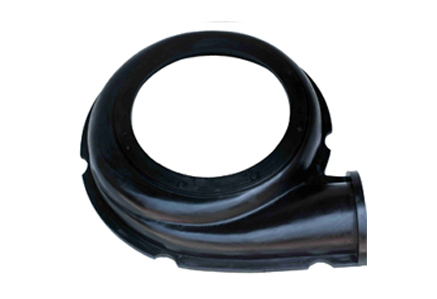
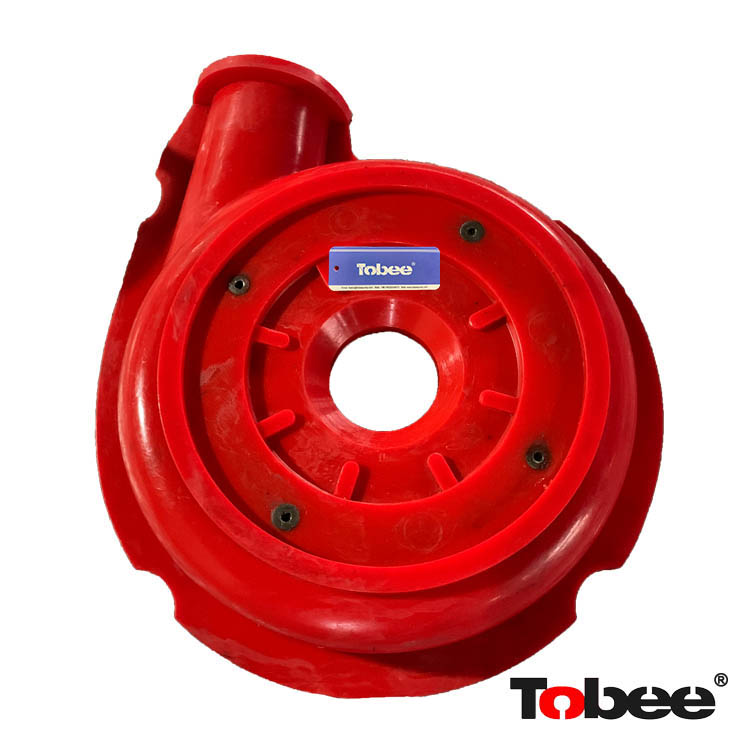
The volute contains the liquid being pumped. It acts as a pressure vessel, directing the fluid's flow in and out of the pump.
Its curved funnel shape gradually increases in area as the fluid nears the discharge port. This particular shape is essential for slowing down the fluid's velocity, thus converting kinetic energy into pressure, as described by Bernoulli's principle.
At the heart of any centrifugal pump lies its shaft or rotor — a long cylindrical piece capable of rotating at high speeds when provided with energy by an external motor or engine source.
This component helps keep all other parts in sync by providing the power to continue functioning correctly throughout the operation.
However, since shafts are exposed to high levels of friction during use, they must be made from durable materials such as stainless steel to avoid wear and tear over time.
While having a durable shaft is essential for prolonged use, it's equally important to have some way of limiting leakage between it and other components inside the pump's casing. This is where shaft sealing comes into play.
This involves placing specialized sealants or gaskets between both pieces so they won't move relative to each other while allowing liquid flow within acceptable limits. If not addressed properly, even minor leaks can lead to damage over time, resulting in reduced efficiency or even damage to nearby parts.
For smoother operation and longer service life, bearings are essential when dealing with spinning components like those on centrifugal pumps.
Bearings provide support for rotors and act as buffers against shock loads. Therefore it keeps away wear and tear on internal parts as much as possible.
There are two main types available: radial ball bearings, which handle radial loads only, and angular contact bearings, which address both radial and axial loads simultaneously.
Other types of bearings include jewel bearings, fluid bearings, and magnetic bearings.
Bookmark
Daniel Féau processes personal data in order to optimise communication with our sales leads, our future clients and our established clients.


This site is protected by reCAPTCHA and the Google Privacy Policy and Terms of Service apply.