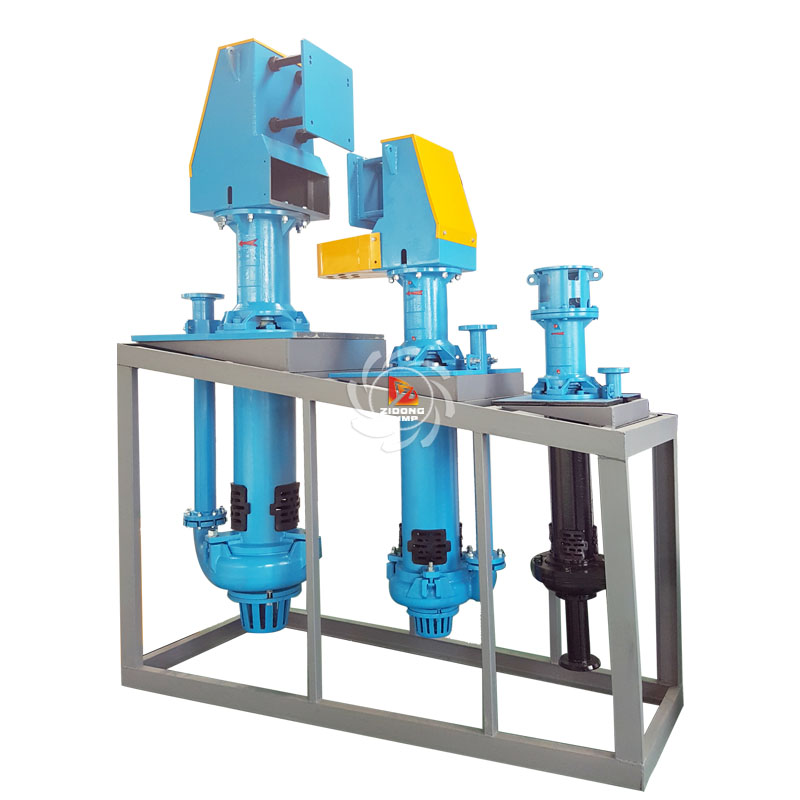
What are the centrifugal pumps?
Centrifugal pumps are the mechanical devices which pump or transport various fluids by converting their rotational kinetic energy into hydrodynamic energy.
Why the name centrifugal pump?
A centrifugal pump uses centrifugal force
Where the centrifugal pumps find applications in power plants?
- Boiler feed water pump
- Auxiliary & main cooling water pumps
- Raw water transfer pumps
- Condensate extraction pump,
- Deaerator & feed water tank make up pumps
- Firefighting water pumps
- UF & RO feed water pumps
- MGF feed pump
- Degassed water transfer pumps
- Sometimes lube & control oil pumps
How do you specify the centrifugal pumps?
Centrifugal pumps are specified as bellow
- Flow in M3/Hr or M3/sec
- Head or discharge pressure in meter or bar or kg/cm2
- Shutoff head
What are the various parts of centrifugal pumps?
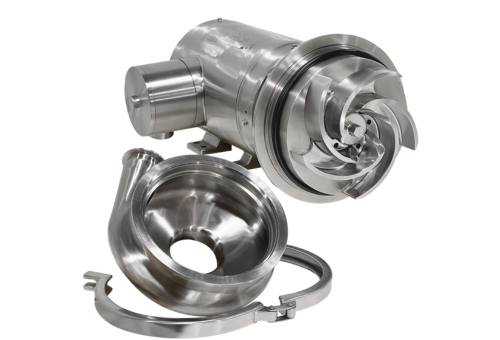
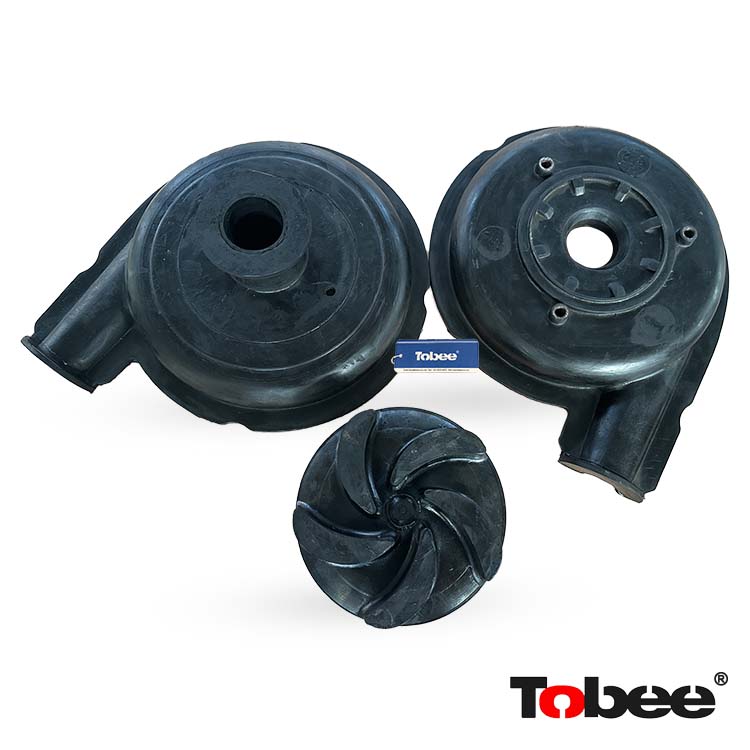
Centrifugal pumps have following parts
- Pump casing or diffuser
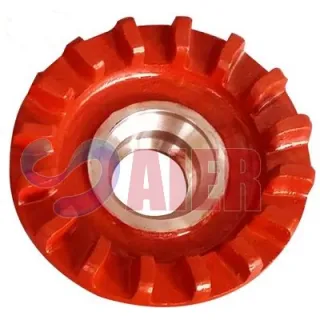
- Impeller
- Wear ring
- Shaft
- Lantern ring
- Stuffing box
- Inlet vertex
- Mechanical seal or gland packing
- Shaft sleeve
- Bearings
What are the energy conversions take place in centrifugal pumps
In centrifugal pumps hydraulic energy is being converted into kinetic energy
What types of reducers are used at pump suction & discharge ends?
Suction side: Eccentric type & Discharge side: Concentric
What are the two main types of centrifugal pumps?
Axial flow & Radial flow
What is the function of impeller in centrifugal pumps?
It converts kinetic energy of pump into hydrodynamic energy by rotary motion
What is the function of pump casing?
Casing converts velocity head from impeller into pressure head & also guides the flow to the discharge end.
What are the types of pump casing?
Volute & diffusers are two different types of pump casing
What do you mean by volute?
A volute is a spiral-like geometry with an increasing through-flow area, reducing the velocity of the fluid and increasing the static pressure
What are the different types of volutes?
Single volute & Double volute
Write down the working principle of centrifugal pumps
In centrifugal pumps, fluid enters the impeller through inlet eye & exists along the circumference between the vanes of impeller. This impeller is connected to shaft & in turn to motor, this rotary motion of the impeller converts kinetic energy of the fluid into hydrodynamic energy.
What are the types of impellers?
Open impeller:As its name suggests, an open impeller has vanes that are open on both sides without any protective shroud.These are structurally weak. These are used for low flow & low head applications. Generally used for pump solids or sludge. These require much NPSH.
Semi open impeller: Semi-open impellers have a back-wall shroud that adds mechanical strength to the vanes.
Closed impeller: Are very robust & require low NPSH
Impellers are also classified as single suction & Double suction
What are the rotary & stationary parts of the pumps?
Rotary parts:
- Shaft
- Impeller
- Shaft sleeve
- Bearings
Stationary Parts
- Pump casing
- Gland packing or mechanical seal
- Lantern ring
Why eccentric reducers are used at pump suction side?
To avoid air locking & cavitation eccentric reducers are used at suction side
What do you mean by the NPSH in pumps?
It is the net positive head required at pump suction to avoid cavitation
What do you understand by the term cavitation?
Cavitation is the formation & collapsing of vapor bubbles at pump’s suction
How the cavitation does affect the pump’s life?
- Cavitation causes
- Vibrations in pump
- Damage of impellers
- Heavy noise
What are the factors considered for centrifugal pumps design?
- Flow required
- NPSH available & NPSH required
- Total head
- Pump efficiency
- Fluid used
What are the materials used for pump casing?
Generally cast steel or cast iron are used for single stage centrifugal pumps
What are the materials used for Impellers?
Impellers are made up of cast iron, gun metal & stain less steel
What is the function of wear ring?
As the name indicates it protects the wear & tear of impeller
What do you mean by static suction head in pump?
Therefore, the static suction head is the vertical distance from the center line of the pump to the free level of the liquid to be pumped.
What do you mean by static suction head in pump?
Static discharge head is the vertical distance between the pump centerline and the point of free discharge or the surface of the liquid in the discharge tank.
What do you mean by total static head?
Total static head is the vertical distance between the free level of the source of supply and the point of free discharge or the free surface of the discharge liquid.
What do you mean by total head?
It is total dynamic discharge head plus total dynamic suction head
Note: If source water level is below the pump center line, then
Total head = Discharge head Suction lift
If source Water level is above the pump suction line, then
Total head = Discharge head-Suction head
What are the problems associated with centrifugal pumps?
Following are the common problems associated with pumps
- Low discharge pressure
- Low delivery
- Cavitation
- High vibrations
- Pump seize
- Over load
- More suction lift
- Air locking & No priming
What are the reasons for no delivery or no discharge in centrifugal pumps?
- Probable reasons are
- Air lock in pump suction
- Suction valve closed
- Low tank level
What are the reasons for low delivery?
- Suction valve partially opened
- Reverse rotation of pump
- Low speed of pump
- Suction strainer is chocked
What are the reasons for over load of pump?
- More flow
- High speed
- Reverse rotation of pump
- Pump discharge kept open to atmosphere
- Internal friction in impeller & wear ring or impeller & casing
- More tightened gland packing
- No lubricant in bearing or bearing seized
What are the potential reasons for pump vibrations?
- Overloading of pump
- Reverse rotation of pump
- Impeller rubbing inside the casing
- Misalignment
- Damaged bearing
- Shaft run out
- Shaft imbalance
Too much noise coming from pump inside, what does this mean?
- Air lock in pump
- Overloading of pump
- Pump discharge line is less than actual required
- Cavitation
- No lubricant in bearings
What are the common mistakes done during pump installation?
- Choosing poor foundation
- Note: Pump foundation weight should be 3 to 4 times the pump weight
- Lesser size suction pipe line
- Lesser size discharge pipe line
- Interchanging concentric & eccentric reducers
What are the safety protections & interlocks given for a centrifugal pumps?
- Over load
- Low load
- High bearing vibrations
- High bearing temperature
- High suction DP
- Source water level low
How do you increase the head & flow of pump by modifying impeller size?
By increasing the impeller diameter head & flow can be increased
By increasing the impeller width flow can be increased
What are the reasons for reduction of pump efficiency?
- Operating the pump at lower capacity
- Operating the pump at higher load
- Throttling the discharge valve
- Increase in impeller & wearing clearance
- Lower suction head
- High suction lift
How do you calculate NPSHA?
NPSHA is Net positive suction available
NPSHA = Atmospheric pressure + static head - vapor pressure - pressure loss in the suction piping - pressure loss due to the suction strainer.
A centrifugal pump of rated capacity 75 M3/Hr & total head 35 meter is supplying water to fill a tank in 2 hours, calculate the total power consumption. Consider pump & motor efficiency 50% & 85% respectively
Power consumption = Pump flow in m3/sec X Pump total head in meter X fluid density X g / (1000 X Pump eff. X Motor eff)
Power consumption = (75/3600) X 35 m X 1000 kg/m3 X 9.81m/s2 / (1000 X 0.5 X 0.85)
Power consumption = 16.83 KWH
Power consumption in 2 hours = 16.83 X 2 = 33.66 KW
A centrifugal pump having hydraulic power 22 KWH, discharge & suction head 55m & 12m respectively
Calculate the pump flow in m3/hr, assume density of water 990 kg/m3
Pump flow = Pump hydraulic power X 1000 / (Pump total head X density of fluid kg/m3 X 9.81 m/s2)
Pump flow = 22 X 1000 /( (55-12) X 990 X 9.81)
Pump flow = 0.052 m3/sec
Pump flow in M3/hr = 0.052 X 3600 = 189.6 M3/hr
A centrifugal pump having hydraulic power 15KWH & pump efficiency 65% calculate the pump shaft power
Pump shaft power = Pump hydraulic power / Pump efficiency = 15 / 0.65 = 23 KW
A centrifugal pump produces flow 20M3/hr (Q1) flow at rated speed 1500 RPM (N1) , then calculate the flow of pump at 1000 RPM(N2)
We have pump affinity law
Q1/Q2 = N1/N2
20 / Q2 = 1500 / 1000
Q2 = 13.33 M3/hr
A centrifugal pump consumes power of 25KW (P1) at speed of 1500 RPM (N1), after reducing certain RPM its power consumption reduces by 5 KW (P2), calculate that speed
We have pump affinity law
P1/P2 = (N1/N2)3
25 / 5 = (1500 / N2)3
N2 = 877.2 RPM
A centrifugal pump produces 150 m (H1) head at 3000 RPM (N1), calculate the head produced if its speed reduced to 50%
We have pump affinity law
H1 / H2 = (N1/N2)2
N2 = N1 X 50% = 3000 X 0.5 = 1500 RPM
150 / H2 = (3000 / 1500)2
H2 = 37.5 meter
A centrifugal pump having impeller diameter 250 mm produces flow 250 M3/hr, calculate the diameter of impeller to produce flow 300 M3/hr
We have
Q1 / Q2 = D1 / D2
250 / 300 = 0.250 / D2
D2 = 0.35 m = 350 mm
A centrifugal pump having impeller diameter 300 mm produces 250 m head & what could be the diameter if we want to reduce the head by 30m
Reduced head = 250 – 30 = 220 m
We have
H1 / H2 = (D1/D2)2
250 / 220 = (300 / D2)2
D2 = 281.4 mm
A centrifugal pump having impeller diameter 150 mm (D1) consumes 15 kw (P1), what is the size of impeller if we want reduce power by 4 KW
P2 = P1-4 = 15-4 = 11 KW
We have
P1 / P2 = (D1 / D2)3
15 / 11 = (150 / D2)3
D2 = 135.2mm