What Is an Impeller?
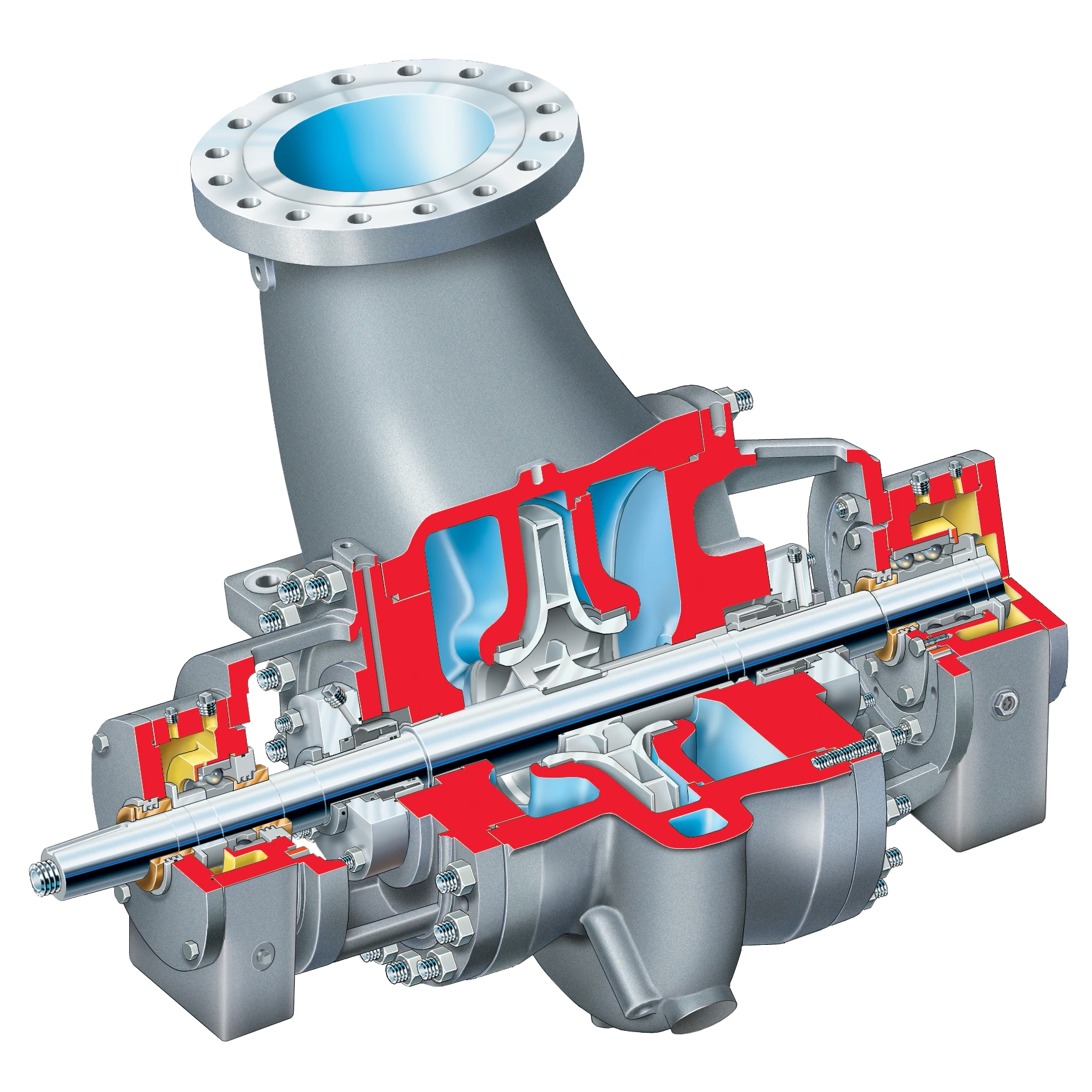
By definition, an impeller is a component of a centrifugal pump that converts the pump’s mechanical energy to kinetic energy. It transfers the energy from the motor to the fluid, increasing its flow rate and pressure.
The part is a rotating iron or steel disc with curved blades or vanes. These blades form a vacuum that sucks the fluid into the center, then pushes it outwards from the center of rotation.
Thanks to the pump’s motor, impellers can rotate at high speeds. When they rotate very fast, they create a centrifugal force that pushes the fluid out and forms a low-pressure area in the center. The low-pressure area sucks in more liquid from the suction, maintaining a continuous flow rate.
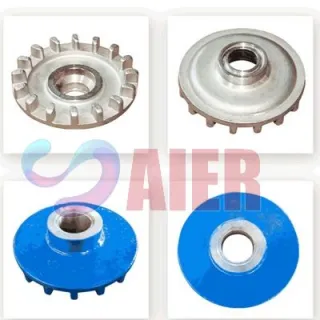
There are two types of impellers — open face and closed face. Closed and open face impellers are suited for different applications because they have different blade sizes, orientations and shapes.
What Is an Open Face Impeller?
An open face impeller doesn’t have a back or front wall. Instead, the blades are attached to a central hub and mounted on a shaft. Since they don’t have a wall, they’re weaker and slightly less efficient than closed impellers. Open impellers are excellent for pumping fluids with suspended solids. Food, chemical processing and water treatment industries commonly use open impellers.
Advantages of open face impellers include:
- Easier maintenance:More parts are visible, so open impellers are easier to clean, inspect for damage and maintain.
- Lower cost:These impellers are easier to manufacture and cost less.
- Fewer blockages:Sand-locking and other blockages occur less frequently with open impellers because there aren’t any small clearance areas, so they’re suitable for small pumps and handling solids.
The disadvantages of open face impellers include the following:
- Less efficient:They are less efficient than other impellers because the flow isn’t guided between the vanes.
- Less durable:Without walls, these impellers are structurally weaker.
- Possible leakage:There’s a gap between the impeller and casing to prevent damage. However, the gap can allow suctioned fluid to leak.
What Is a Closed Face Impeller?
Closed impeller blades have a front and back wall that acts like a cover and encloses them. The walls increase strength and efficiency when pumping solids, but they are more suitable for pumping liquids. Mining, wastewater treatment, and paper and pulp industries commonly use closed face impellers.
Here’s a couple advantages of closed face impellers:
- Increased efficiency:Greater strength makes these options more efficient at pumping solids.
- Greater durability:The walls reduce the load on the shaft, increasing the component’s durability and life span.
Disadvantages of closed face impellers include:
- More difficult to clean and maintain:Clogged closed face impellers are more challenging to clean and maintain than their open face counterparts because you can only see some of the parts.
- More expensive:These impellers are more difficult to manufacture, making them more expensive.
Main Differences Between Open and Closed Face Impellers
While it’s vital to consider efficiency, reliability and maintenance when choosing an impeller, picking the right style for your application is equally important. Here are some of the key differences between open and closed face impellers:
- Closed impellers can handle explosive and volatile fluids — an open impeller cannot.
- You must disassemble a closed impeller to inspect it.
- Closed impellers lose their efficiency over time, but you can maintain an open impeller’s efficiency by adjusting the wear ring’s clearance. The clearance affects the fluid flow rate.
- Open impellers are less likely to clog and easier to clean.
- You can cut an open impeller’s blades to improve capacity.
- Open impellers have a more comprehensive range of speeds than closed impellers.
- The larger the diameter, the more fluid the impeller can handle, but the more energy it requires. A smaller diameter handles less fluid but is more energy-efficient.
How to Select an Impeller
To determine which impeller is best for your application, consider the flow rate, specific gravity, head, viscosity and solids content.
- Flow rate:The flow rate measures the number of gallons a pump can movein a minute or gallons per minute (GPM). A higher GPM indicates a higher flow rate.
- Specific gravity:Specific gravity is the ratio of a substance’s mass to that of an equal volume of water at the same pressure and temperature. Basically, it’s the fluid’s density compared to the density of water. It determines the fluid’s weight, which affects a pump’s efficiency. If your fluid’s specific gravity is higher than one, it requires more power to pump because it’s heavier than water.
- Head:The head is the height the water must reach to get pumped. Often, the GPM is based on the head measurement. For example, 100 GPM at 40 feet of head means the equipment can pump 100 gallons a minute when pumping water at 40 feet.
- Viscosity:Viscosity is a liquid’s resistance to flow, which affects a pump’s efficiency. The higher the substance’s viscosity, the more power is required to pump.
- Solids content:The amount of solid waste in your substance is central to determining your impeller. Most industries choose open face impellers for solids because they don’t clog as easily. At the same time, closed face impellers are more efficient.