



EUR
en
Here’s a detailed introduction to the classifications of materials commonly used in slurry pumps, including high-chromium alloys, rubber, and ceramics, organized by category:
High-chromium alloys are widely used in slurry pumps for their exceptional wear resistance and moderate corrosion resistance. They are classified based on chromium content, microstructure, and application-specific standards:
High-Chromium White Iron (ASTM A532)
Class I (Ni-Hard):
Type A (Ni-Cr-Hard): Contains 3–5% Ni, 1–4% Cr.
Used for moderate abrasion and low-impact conditions.
Class II (High-Chromium Iron):
Type B (Cr15Mo3): 15–18% Cr, 2–3% Mo.
Type C (Cr20Mo2): 18–23% Cr, 1–2% Mo.
Type D (Cr27Mo2): 23–28% Cr, 1–2% Mo.
Higher chromium improves corrosion resistance; ideal for highly abrasive slurries (e.g., mining).
Class III (Martensitic Steel):
Combines chromium with carbon (e.g., AISI 420, 440C) for wear and corrosion resistance.
Custom Alloys:
Cr27: 25–30% Cr for severe abrasion and mildly corrosive environments.
Cr30Mo: Enhanced molybdenum for better toughness and thermal stability.
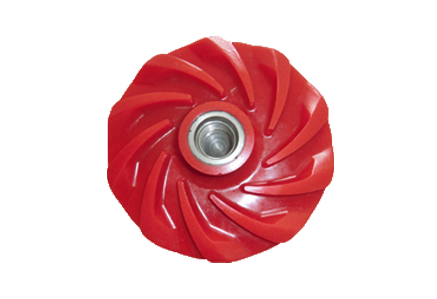
Rubber linings or impellers are used for slurries with sharp particles or corrosive chemicals. Types include:
Natural Rubber (NR):
Excellent elasticity and impact resistance.
Limited to temperatures below 70°C; suitable for non-oily, non-oxidizing slurries.
Synthetic Rubbers:
Styrene-Butadiene Rubber (SBR): Cost-effective for mildly abrasive slurries.
Neoprene (CR): Resists oils, acids, and moderate abrasion.
Nitrile Rubber (NBR): Oil-resistant; used in hydrocarbon-containing slurries.
Ethylene Propylene Diene Monomer (EPDM): Resists heat (up to 120°C), ozone, and alkalis.
Polyurethane (PU): Ultra-high abrasion resistance but limited to low temperatures (<60°C).
Specialized Elastomers:
Hydrogenated Nitrile (HNBR): Improved temperature and chemical resistance.
Fluoroelastomers (FKM/Viton): For highly corrosive or high-temperature slurries (e.g., acidic mine drainage).
Ceramics are used in extreme wear and corrosion scenarios. Common types include:
Alumina Ceramic (Al₂O₃):
92–99% purity alumina.
High hardness (Mohs 9) but brittle; used in small-particle, high-velocity slurries.
Silicon Carbide (SiC):
Reaction-Bonded SiC: Combines SiC with silicon for toughness.
Sintered SiC: Pure SiC for extreme wear and chemical resistance (e.g., acidic slurries).
Zirconia (ZrO₂):
High fracture toughness and thermal shock resistance.
Used in high-temperature or fluctuating thermal conditions.
Composite Ceramics:
Alumina-Zirconia (AZC): Combines hardness (Al₂O₃) with toughness (ZrO₂).
Silicon Carbide-Reinforced Polymers: Hybrid materials for lightweight abrasion resistance.
Key Applications
High-Chromium Alloys: Mining (iron ore, coal), dredging.
Rubber: Coal washing, phosphate slurries, chemical processing.
Ceramics: Severe abrasion (sand pumping), corrosive acids, high-temperature slurries.
Bookmark
Daniel Féau processes personal data in order to optimise communication with our sales leads, our future clients and our established clients.


This site is protected by reCAPTCHA and the Google Privacy Policy and Terms of Service apply.