






EUR
en
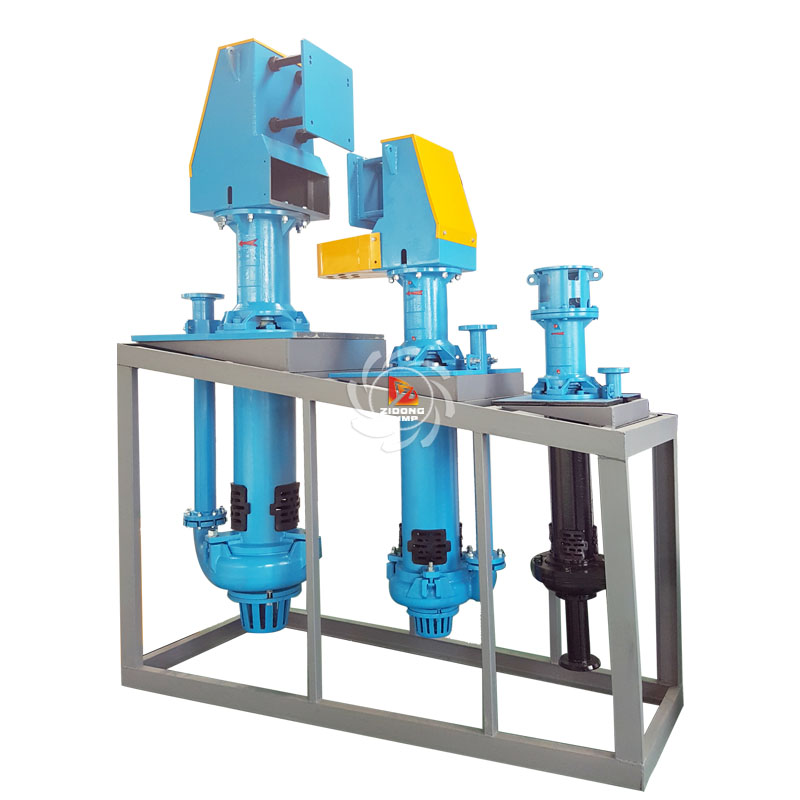
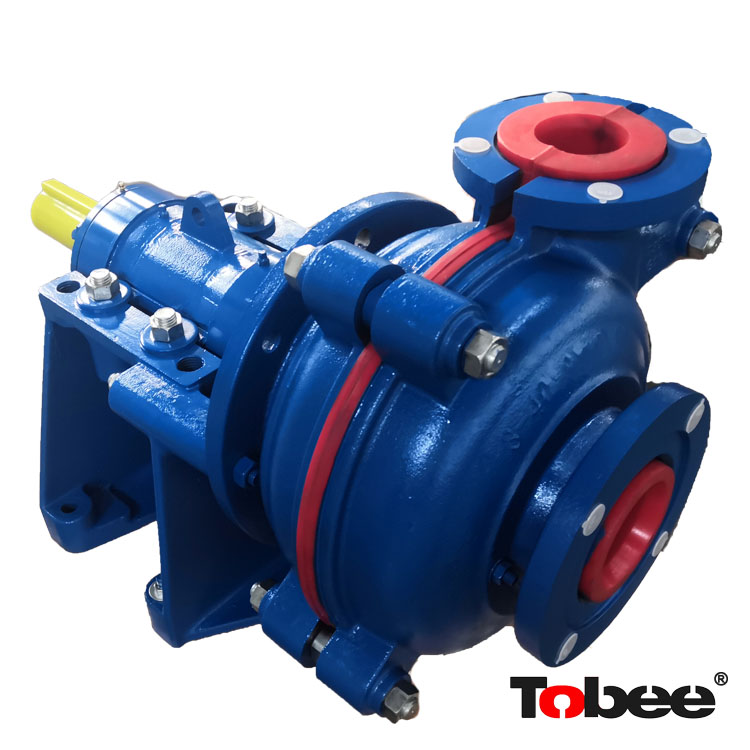
In many fields of modern industrial production, handling highly abrasive and high-concentration slurries has always been an extremely challenging task. The high-density mortar pump, as an outstanding centrifugal slurry pump, has become an indispensable key equipment in industrial production due to its comprehensive performance and wide applicability.
This equipment adopts a horizontal, cantilever, centrifugal, single-stage structural design. The horizontal design allows the equipment to be stably installed on the ground foundation, which not only reduces the difficulty of installation, but also maintains good stability during operation, reducing equipment loss and potential safety hazards caused by vibration. The cantilever structure cleverly solves the problem of protecting the shaft seal and bearings during slurry conveying. By cantilever-mounting the impeller, it avoids direct contact between the slurry and key components such as bearings, effectively extending the service life of the equipment.
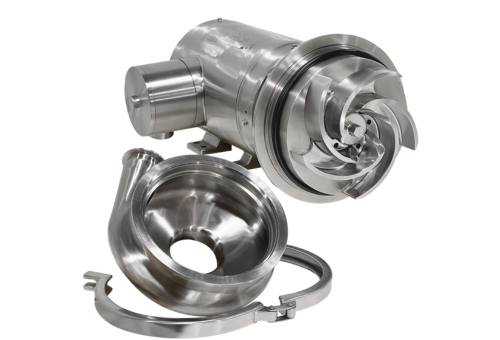
The centrifugal working principle is the core of its efficient conveying. When the motor drives the impeller to rotate at high speed, the slurry in the impeller is thrown to the edge of the impeller under the action of centrifugal force and enters the flow channel in the pump casing, thereby realizing the conveying of the slurry. This working method can not only provide stable flow and pressure, but also adapt to slurries of different concentrations and particle sizes, meeting diverse industrial needs. The single-stage design, while ensuring conveying efficiency, simplifies the structure of the equipment, reduces maintenance costs, and keeps the equipment in good economy during long-term operation.
The bearing assembly adopts a structure of a large-diameter shaft with a short overhang. The large-diameter shaft can bear larger radial and axial loads, enhancing the rigidity and anti-deformation ability of the shaft. The short overhang design greatly reduces the deflection of the shaft during operation, reduces the additional torque borne by the bearings, thereby effectively reducing the wear rate of the bearings and significantly extending their service life.
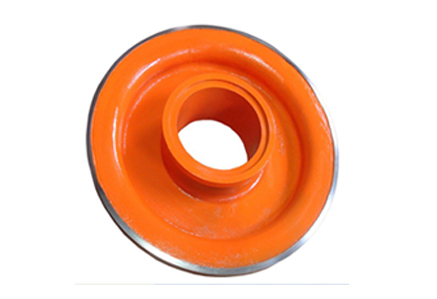
The high-density mortar pump fully considers this problem in the material selection of wet parts, using various wear-resistant and anti-wear materials such as high-chromium alloys and rubber. High-chromium alloys have extremely high hardness and wear resistance, which can resist the scouring and grinding of hard particles, and are suitable for handling highly abrasive slurries; rubber materials have good elasticity and toughness, can absorb the impact of slurry particles, and also have excellent corrosion resistance, suitable for handling slurries with certain corrosive components.
These wet parts of different materials are completely interchangeable with each other. This interchangeability provides great convenience for users. When the equipment is operating under different working conditions, users can flexibly replace wet parts of different materials according to the characteristics of the slurry and processing requirements without large-scale modification of the equipment. This flexible configuration method not only improves the adaptability of the equipment, but also can minimize equipment wear and extend the service life of the equipment while ensuring the processing effect.
A wide range of applications is another major advantage of the high-density mortar pump. It can be perfectly adapted to many industrial sectors such as metallurgy, mining, coal, electric power, and building materials.
This high-density mortar pump provides three different sealing methods, each with its unique advantages and application ranges.
The first is packing seal, which is a traditional and widely used sealing method. It achieves sealing by filling elastic packing at the shaft seal, utilizing the close contact between the packing and the shaft surface. This sealing method has a simple structure, low cost, and convenient maintenance, and is suitable for working conditions where the sealing requirements are not high, and the slurry temperature and pressure are low.
The second is mechanical seal. Compared with packing seal, mechanical seal has higher sealing performance. It is composed of a moving ring and a static ring, forming a sealing surface through the close fit between the moving ring and the static ring. Under the action of the spring, it can always maintain a good sealing state. Mechanical seal has small leakage and long service life, and is suitable for working conditions where the slurry temperature is high, the pressure is large, and the sealing requirements are strict.
The third is auxiliary impeller seal, which is a sealing method using hydrodynamic principles. An auxiliary impeller is installed on the pump shaft. When the impeller rotates, the auxiliary impeller will drive the surrounding slurry to form a high-pressure area, thereby preventing the slurry in the pump from leaking out. The auxiliary impeller seal does not require additional sealing parts, has a compact structure, and is suitable for conveying slurries containing larger particles, which can effectively avoid seal failure caused by particle jamming.
The high-density mortar pump has become an ideal choice in the field of industrial slurry treatment due to its comprehensive performance, wide applicability and flexible configuration methods. It can not only cope with various harsh working conditions, but also maintain stable performance during long-term operation, reducing production costs and improving production efficiency for enterprises.
Bookmark
Daniel Féau processes personal data in order to optimise communication with our sales leads, our future clients and our established clients.


This site is protected by reCAPTCHA and the Google Privacy Policy and Terms of Service apply.