





EUR
en
When drilling is in progress, the components of the hoisting system, mud pumps and prime movers are used to circulate drilling fluid from the mud pits through the drillstring and out the bit. Cuttings are flushed from the bottom of the borehole up to the surface, thus cleaning the bottom of the hole and providing the logging geologist with samples at the surface.
A drilling rig usually has two mud pumps, and these are the heart of a fluid-circulating system. Their function is to circulate the drilling fluid under pressure (up to 7500 psi) from a surface pit, through the drillstem, to the bit, return it up the annulus, and back to the pit. There are two types of pumps used in t he oil industry.1. Duplex (2 pistons).2. Triplex (3 pistons). A recent development is Hex pump which contains 6 pistons. A basic pump consists of a piston (the liner) which moves back and forth (reciprocates)inside a cylinder. The normal mud pump consists of two main assemblies.
1. The Fluid End: It produces the pumping process with valves, pistons & liners. To reduce severe vibration caused by the pumping process, these pumps incorporate both suction & discharge pulsation dampener. 2. The Power End: It converts the rotation of the drive shaft to the reciprocating motion of the pistons.
A pump is said to be single-acting or triplex if it pumps fluid on the forward strokes. It contains 3 pistons. Triplex single-acting pumps put pressure on only one side of the piston. These pumps have three pistons and are much lighter than duplex pumps. More power can be obtained from a relatively small triplex pump because it operates at higher speeds, 120 to 160 spm. As triplex pumps operate at higher speeds, they usually have a centrifugal pump to charge the suction. With a properly charged suction, triplex pumps can operate at nearly 100%volumetric efficiency. When efficiency problems are discovered, it is usually because of problems with the suction p ump.
A pump is said to be double-acting or duplex if it pumps fluid on both forward & backward strokes. It contains 2 pistons. In duplex pumps, each of the two cylinders is filled on one side of the piston & at the same time fluid is being discharged on the other side of the piston. Each complete cycle of the piston results in the discharge of a fluid volume that is twice the volume of cylinder, minus the volume of the rod. Double acting pumps stroke four times during each cycle. Strokes per minute (spm), on a duplex pump actually means cycles per minute. Duplex pump operates at relatively low speed i.e. 60 to 70 spm. The volume of fluid pumped per minute is determined by multiplying the volume pe r complete cycle by the number of strokes/cycles per minute. Volume o f fluid pumped (per min) = Volume (per complete cycle) × Strokes/Cycles (per min)Vol o f fluid pumped/min = Vol/cycle × Spm
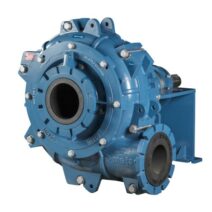
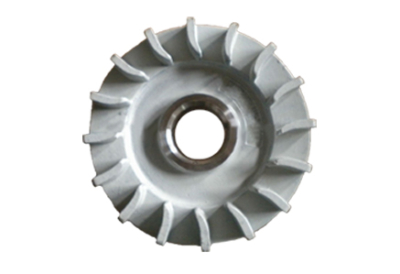
This type of pump uses an impeller (Rotor inside a tube or conduit used to increase the pressure & flow of fluid) for the movement of fluid rather a piston reciprocating inside a cylinder. Centrifugal pumps are commonly used to move liquids through a piping system. They are used to surcharge mud pumps & providing fluid to solids control equipment & mud mixing equipment. A centrifugal pump works by converting kinetic energy into potential energy,measurable as static fluid pressure.
Pump liners fit inside the pump cavity. They affect the pressure rating & flow rate from the pump. For a given pump, a liner has the same OD (Outer Diameter) but different I D ( Internal Diameter). The smaller liner (small I D) is used in the deeper part of the well where low flow rate is required but much higher operating pressure.
The horsepower requirement of the pump depends on flow rate & the pressure.
The operating pressure depends on flow rate, depth & size of the hole, size of the drill pipe &drill collars, mud properties & size of n ozzle used.
The size of the pump is determined by the length of its st roke & the size of the liner.
Drilling mud usually contains little air & is slightly compressible. Hence the piston moves through a shorter stroke than theoretically possible before reaching discharge pressure. As a result, the volumetric efficiency is always less than one; typically 95% for triplex & 9 0 % for duplex. In addition, due to power losses in drives, the mechanical efficiency of most pumps is about 85%.
Mud The liquid circulated through the wellbore during rotary drilling and work over operations. Mud Acid A mixture of hydrochloric and/or hydrofluoric acids and surfactants used to remove wall cake from the wellbore. Mud Cake The sheath of mud solids that forms on the wall of the hole when liquid from mud filters into the formation. Also called filter cake or wall cake. Mud Centri f uge A device that uses centrifugal force to separate small solid components from liquid drilling fluid. Mud Cleaner A cone-shaped device, a hydro cyclone, designed to remove very fine solid particles from the drilling mud. Mud Engineer A n employee of a drilling fluid supply company whose duty it is to test and maintain the drilling mud properties that are specified by the operator. Mud-Gas Separator A device that removes gas from the mud coming out of a well when a kick is being circulated out. Mud Hopper A large funnel- or cone-shaped device into which dry components (such as powdered clay or cement) can be poured to later mix with water or other liquids. T he dry componen t is i nducted through a nozzle at the bottom of the hopper. Mud Hose T he hose on a rotary drilling rig that conducts the drilling fluid from the mud pump and standpipe to the swivel and Kelly; also called the mud hose or the Kelly hose. I t is a steel reinforced, flexible hose that is installed between the standpipe and the swivel or top drive. I t is also called Rotary Hose. Mud Line A mud return line. Mud Logging T he recording of information derived from examination and analysis of formation cuttings made by the bit and of mud circulated out of the hole. A portion of the mud is diverted through a gas-detecting device. Cuttings brought up by the mud are examined under ultraviolet light to detect the presence of oil or gas. M ud logging is often carried out in a portable laboratory set up at the well site. Mud Motor A drilling tool made up in the drill string directly above the bit. I t causes the bit to turn while the drill string remains fixed. I t is used most often as a deflection tool in directional
Bookmark
Daniel Féau processes personal data in order to optimise communication with our sales leads, our future clients and our established clients.


This site is protected by reCAPTCHA and the Google Privacy Policy and Terms of Service apply.