Mike Haglund asks:
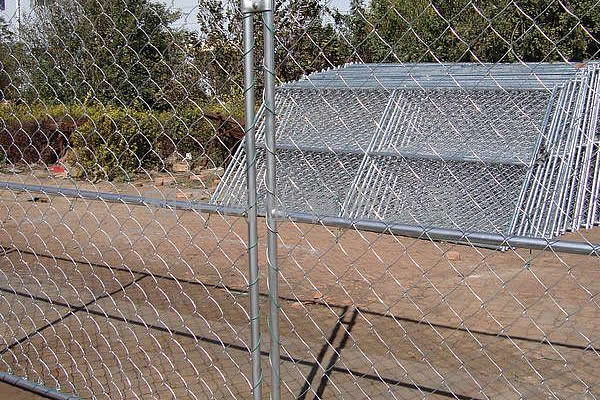
I have built a 100 ft x 50 ft chain link fence 8 ft tall using recycled commercial chain link fence components with steel posts set in concrete at least 3 feet into the ground. We have deer, bears, rabbits, raccoons, coyotes, opposums, squirrels, groundhogs, moles and other pests. The deer are the most problematic though and the chain link all by itself seems to have stopped them. We installed one inch mesh all the way around the base which goes 2 feet up and is attached to the chain link by hog rings. Since the mesh used was 4 ft tall, it was bent in half and the lower 2 ft is staked into to ground horizontally with many hundreds of landscaping staples. This seems to have stopped the rabbits or anything trying to get under the fence. Now I am installing an electric fence on the outside of the chain link fence to foil raccoons and other climbing critters. This will only be powered during gardening months of June thru October. So I have some questions:
- Although I have three 8 ft galvanized grounding rods and intend to use them, I am curious as to whether the existing fence with its 32 steel posts in concrete either could or should be used as additional grounding?
- I have purchased these cheap stand-off perch style insulators that attach to the chain link fabric and am not impressed, but gonna try to use them anyway. I have single strand heavier gauge electric fencing wire that I hope is not too heavy for the flimsy insulators. Any problem with wrapping the wire around insulators at each post (10 ft spacing on posts) with just a moderate amount of tension to keep them from sagging?
- Since the lower 2 ft of the chain link is already protected by galvanized steel mesh, I see no need to put a hot wire at the bottom or any lower than the 2 ft height of the top of the mesh. I just see it as encouraging shorting the fence faster with grass growth... Am I wrong about that? Given my fence structure presently, at what height would you install three hot wires and why?
- When I string hot wires around the corners, is a short section of pvc or scrap garden hose sufficient to insulate the hot wires from the metal corner posts that they will be near?
- On the single gate... I have seen a few depictions of an insulated galvanized wire buried underground and being used to jump the hot wires from one side to the other of the gate. Is this really necessary since I have the insulated gate kits with spring tensioners to do that anyway?
Thank you for your input.
Dalton Dycer responds:
Hey Mike! Wow lots of questions I’ll try and answer as many as I know from application in real world applications.
- Totally overkill if you did the grounding rods given you’ll have plenty enough ground. Plus the idea of the hot wire being so close to a well grounded source is going to make your intruder the arc in the middle. On our fence we ran one wire in the dirt not hooked to power at all and ran it the whole fence line as the ground. The easy way to do that would just be to hook the ground wire to the fencing.
- I’d recommend a heavier gauge wire that doesn't sag on a 10 ft span the thin stuff doesn’t take windfall branches well. Also if it has enough give to sway in a slight wind …might be jostled close enough to arc onto the ground fence. The wire we use professionally you don’t wrap in the insulators. Just feed it through so if something falls on it, easy peeezy fix. That thin crap is cheesy. It will work but it also may cause headaches later. Be advised these are only my opinion.
- 18” bottom for like you said the 2’ is covered but most critters menacing you are in that 18”- 48” height range so I’d run them accordingly in your situation. Bottom 18” middle 33” to 48”
- They make a sleeve that goes over the wire and it’s flexible to bend corners… I’d look into that it would be what you’ll think is most clean in the end. But dude garden hose works just as good! Slightly more unsightly but it’s cool upcycling!
- Seems redundant until you think about your gate being open and that taking out the power to the other side of the fence… but c’mon it’s not Jurassic park out there you could do more underground garden hose if you’re really afraid T. rex is gonna come chomp your tomatoes!
This sounds like such a fence I bet nothing but birds get in when it’s done!
I do work for an old timer that doesn’t even use insulators just wraps a loose hot wire around his fruit trees and all around looks hokey as heck but he says when the deer stand on 2 legs to be real tall and eat his apples they get a real surprise when their tongue hits the wire. Just goes to show some people don’t use conventional fences and have really good luck
Douglas Alpenstock says:
Wow, Mike. That's hardcore. Your garden is a fortress! Dry soil can be a pretty good insulator. Connecting your chain link fence to ground rods is a good idea. I find the poly/aluminum fence wire much lighter and easier to work with. It has a bit of stretch that helps hold tension. Just about anything non-conductive will help keep the fence from shorting out. It it's a hot fencer, you'll actually hear any shorts go tick-tick-tick. One trick my father used to do is to "train" animals about the electric fence. An area of ground deliberately kept wet, with treats within reach, gives them a helluva jolt. They tend to avoid it after that. BTW it seems like you could do a lot of harvesting *outside* the fence as well, for the freezer.
Joseph Lofthouse says:
The chain link fence is grounded. The grounding rods are grounded. Might as well connect them both with a wire, rather than depending on the variable moisture content of the ground to complete the circuit.